Publications
2025
-
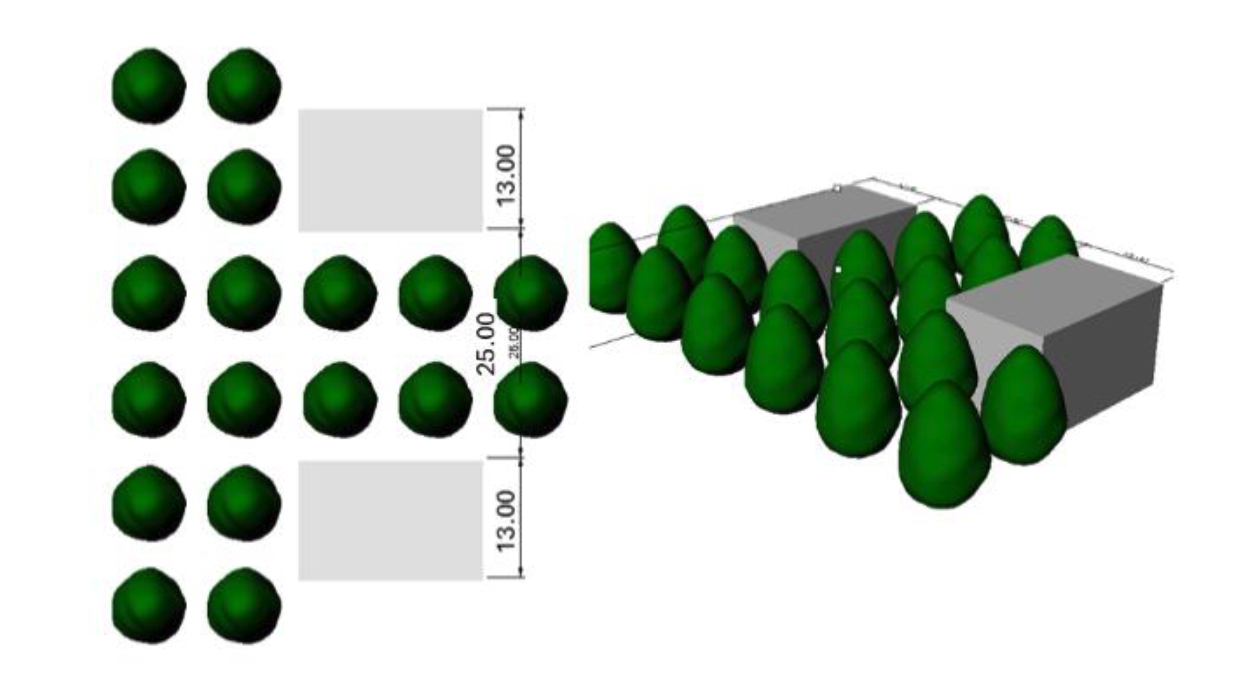 The influence of vegetation structure on urban microclimate: A CFD analysis of urban block and vegetation densitiesChinmay Shashikant Rothe, Marionyt Tyrone Marshall, and Patrick KastnerIn Proceedings of Building Simulation 2025: 18th Conference of IBPSA, Brisbane, Australia, Aug 2025
Urbanization has a considerable impact on the Urban Heat Island (UHI) effect and results in a negative impact on outdoor thermal comfort. In this context, vegetation can be an important lever in alleviating the UHI. Various types of sizes, and densities of vegetation offer different levels of cooling effects in the surrounding areas thereby enhancing thermal comfort. This paper assesses the impact of urban block layouts and varying vegetation densities on the urban microclimate specifically focusing on the regulation of humidity and air temperature. The objective is to determine how variations in vegetation types, densities, and sizes specifically influence the microclimate. We used Computational Fluid Dynamics (CFD) to analyze airflow patterns, temperature differences, and humidity levels in three different locations on a university campus in Atlanta, Georgia. The vegetation is modeled with different levels of porosity and sizes. The Leaf Area Density (LAD) is a measure that quantifies the leaf surface area in a given volume of vegetation. LAD affects the heat balance of the leaves which affects the surrounding temperature. The density of LAD determines the extent of shading and cooling effects through transpiration and absorption of solar radiation process. The higher the density would generally experience more shading and reduced temperatures, which is essential for regulating urban microclimate. The Universal Thermal Comfort Index (UTCI) is used to show the reduction in the temperature and thermal stress in and around the vegetation regions. The simulation will be investigated in a three-dimensional urban microclimate setting inside the Rhinoceros3d modeling software and carried out using the ‘urbanmicroclimatefoam’ solver in OpenFOAM. Trees are modeled as porous zones where LAD value is set to non-zero. Through this study we aim to propose guidelines for Sustainable analysts and Urban planners on the influence of vegetation in outdoor temperature and its impacts on local microclimate and neighborhood buildings.
@inproceedings{rothe2025influence, title = {The influence of vegetation structure on urban microclimate: A CFD analysis of urban block and vegetation densities}, author = {Rothe, Chinmay Shashikant and Marshall, Marionyt Tyrone and Kastner, Patrick}, year = {2025}, month = aug, booktitle = {Proceedings of Building Simulation 2025: 18th Conference of IBPSA}, publisher = {IBPSA}, location = {Brisbane, Australia}, url = {https://publications.ibpsa.org/conference/paper/?id=bs2025_1754}, } -
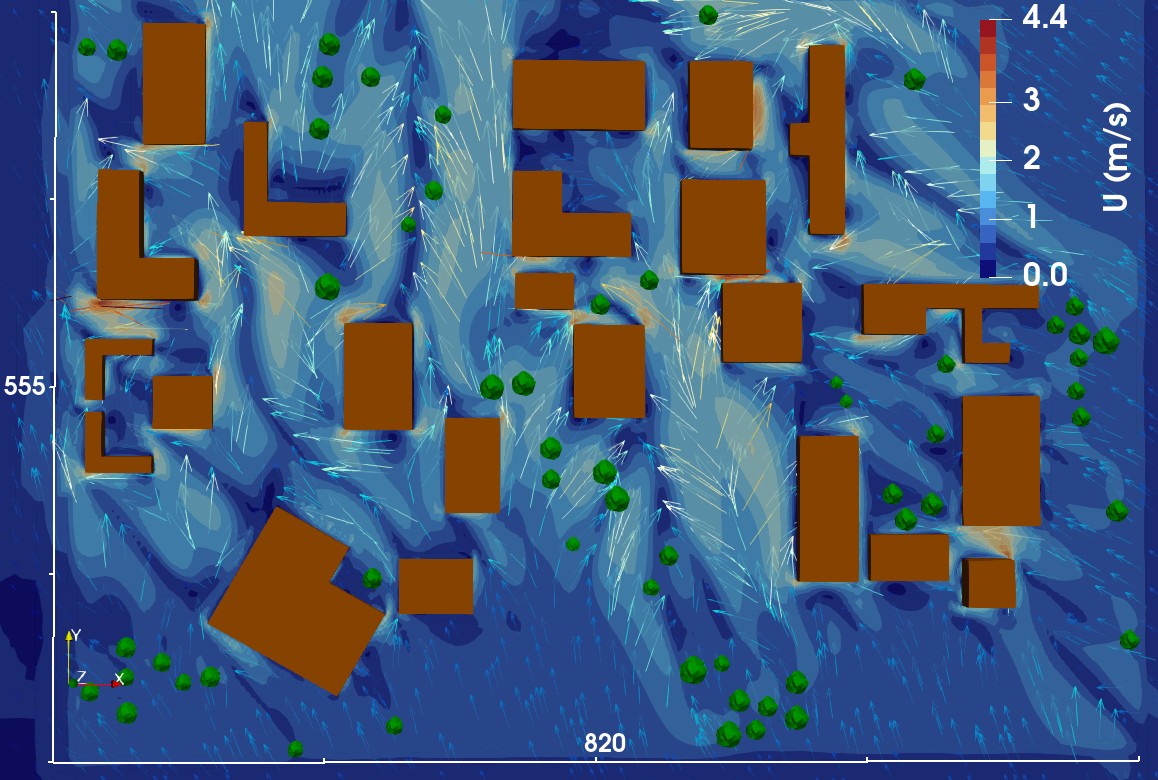 Coupled Urban Physics in Microclimate Modeling: Validating and Enhancing Simulation ToolsBuilding and Environment, Aug 2025
Significant advances in microclimate modeling tools range from no coupling to fully coupled urban physics, requiring a tradeoff between simulation speed and accuracy. This study was conducted to validate the urbanMicroclimateFoam solver for accuracy, as a key step toward improving its reliability for urban microclimate modeling. A detailed 3D model was created, and transient simulations were performed and compared against weather station data from Georgia Tech’s campus. The solver includes heat, air, moisture (HAM), radiation (RAD), and vegetation (VEG) physics, and its performance was evaluated in terms of temperature, humidity, and thermal comfort. Results show strong agreement with measured data, achieving a temperature RMSE as low as 1.03°C and a humidity RMSE of 4.78% at the best performing location. Simulations also captured diurnal WBGT trends and vegetation driven cooling up to 2.1°C. The findings highlight the value of fully coupled CFD models for understanding the urban heat island effect and designing more sustainable, climate resilient cities.
@article{rahimi2025coupled, title = {Coupled Urban Physics in Microclimate Modeling: Validating and Enhancing Simulation Tools}, author = {Rahimi, Sina and Alvarez, Marcelo and Stone, Brian and Berardi, Umberto and Kastner, Patrick}, year = {2025}, journal = {Building and Environment}, publisher = {Elsevier}, pages = {113637}, url = {https://www.researchgate.net/publication/395227387_Coupled_Urban_Physics_in_Microclimate_Modeling_Validating_and_Enhancing_Simulation_Tools}, } -
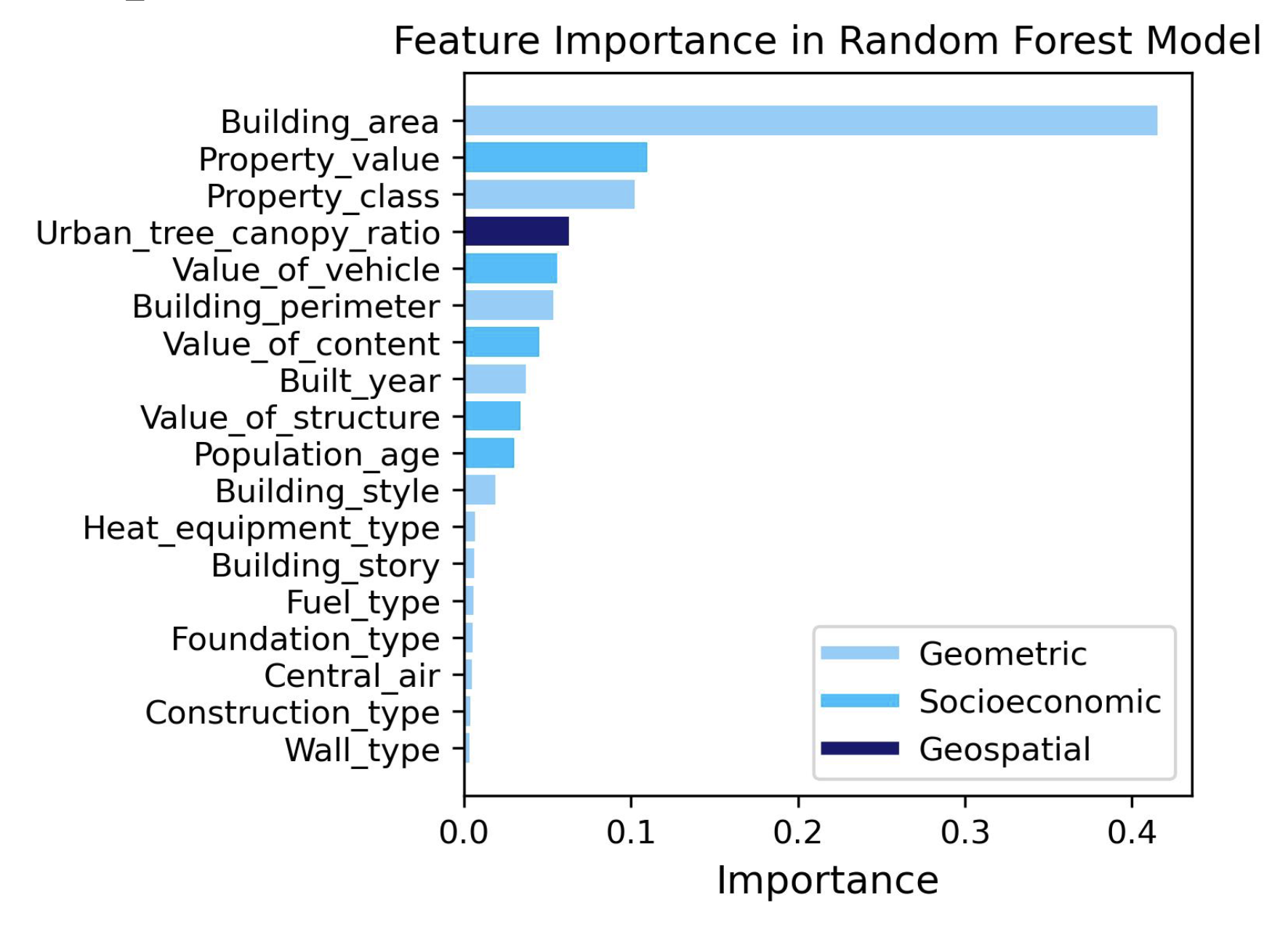 Understanding Urban Building Energy Consumption with Explainable Machine Learning ApproachesHang Xu, Chengxuan Li, Patrick Kastner, and Timur DoganIn Proceedings of CAAD Futures 2025, Jul 2025
Urban decarbonization is a critical goal in addressing climate change, requiring large-scale Urban Building Energy Models (UBEMs) to inform effective policy decisions. To understand the non-linear relationships between individual building energy demand, complex neighborhood context, and population factors at an urban scale, this study uses machine learning-based models of energy use combined with rarely-used geospatial data. In our case study area, we combine building footprints, tax assessments, and anonymized meter-level energy usage billing data provided by the local utility. We derive non-geometric information from tax assessment data that incorporates thermal systems, vintage, improvement records, demographics, and rural-urban definitions. We include geospatial features, such as the urban tree canopy (UTC) ratio, to capture microclimate impacts on building energy demand, driven by shading and evapotranspiration effects. We compare multiple machine learning models—including Multivariable Linear Regression (MLR), K-Nearest Neighbors (KNN), Support Vector Machine (SVM), Extreme Gradient Boosting (XGB), and Random Forest (RF)—with respect to Mean Absolute Error (MAE), Root Mean Square Error (MSE), and the coefficient of determination (R²). Results show RF outperforms other models, and partial dependence plots (PDPs) highlight the significance of UTC in shaping building energy consumption. These findings help prioritize model features for data-driven urban building energy modeling and emphasize the need to incorporate additional microclimate features in future studies.
@inproceedings{xu2025understanding, title = {Understanding Urban Building Energy Consumption with Explainable Machine Learning Approaches}, author = {Xu, Hang and Li, Chengxuan and Kastner, Patrick and Dogan, Timur}, booktitle = {Proceedings of CAAD Futures 2025}, year = {2025}, month = jul, url = {https://www.researchgate.net/publication/394537941_Understanding_Urban_Building_Energy_Consumption_with_Explainable_Machine_Learning_Approaches}, } -
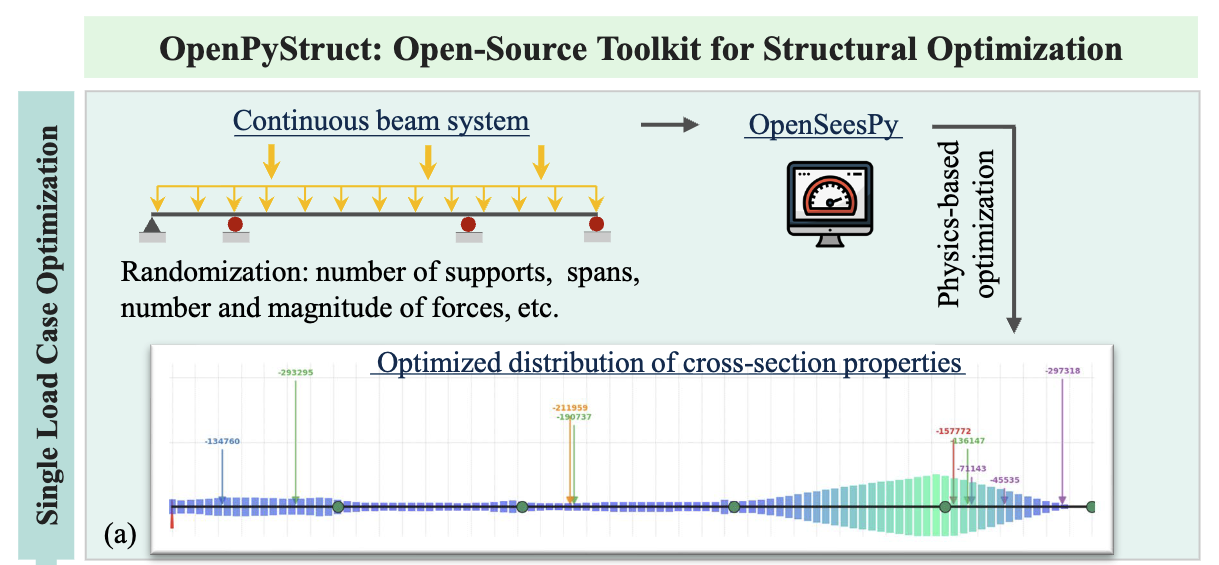 OpenPyStruct: Open-source toolkit for machine learning-driven structural optimizationDanny Smyl, Bozhou Zhuang, Sam Rigby, Edvard Bruun, and 4 more authorsEngineering Structures, Jul 2025
OpenPyStruct (Toolkit URL: OpenPyStruct, Repository URL: Data) is an open-source toolkit that provides finite element model based optimization frameworks for generating training data and machine learning models for global structural optimization of indeterminate continuous structures. The key machine learning feature of OpenPyStruct is its ability to optimize single or multiple arbitrary loading and support conditions. The framework utilizes multi-core central processing unit (CPU) and graphics processing unit (GPU)-enhanced implementations integrating OpenSeesPy for structural optimization. PyTorch is used for accelerated computations. Accompanying machine learning scripts enable users to train high-fidelity predictive models such as transformer with diffusion modules, physics-informed neural networks (PINNs), convolutional operations, and contemporary machine learning techniques to analyze and optimize structural designs. By incorporating state-of-the-art optimization tools, robust datasets, and flexible machine learning resources, OpenPyStruct aims to establish a scalable and fully-transparent engine for structural optimization by engaging the structural engineering community in this open-source toolkit.
@article{SMYL2025120869, title = {OpenPyStruct: Open-source toolkit for machine learning-driven structural optimization}, author = {Smyl, Danny and Zhuang, Bozhou and Rigby, Sam and Bruun, Edvard and Jones, Brandon and Kastner, Patrick and Tien, Iris and Gallet, Adrien}, year = {2025}, journal = {Engineering Structures}, volume = {343}, pages = {120869}, issn = {0141-0296}, doi = {https://doi.org/10.1016/j.engstruct.2025.120869}, url = {https://www.sciencedirect.com/science/article/pii/S014102962501260X}, keywords = {Structural design, Finite element method, Machine learning, Optimization, Python, Structural engineering}, } -
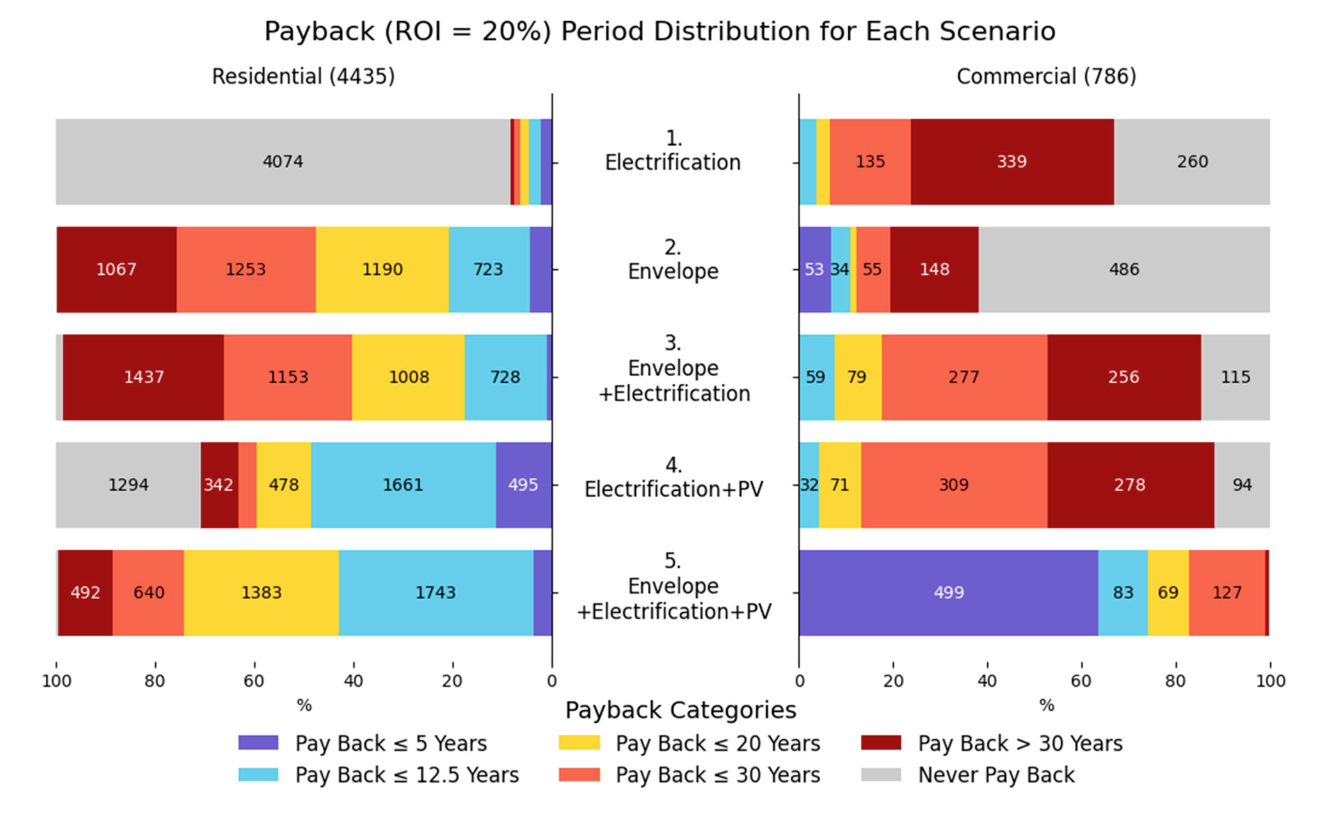 A bottom-up urban building energy model for evaluating thermal load electrification measuresTimur Dogan, Chengxuan Li, Hung Ming Tseng, Amber Jiayu Su, and 1 more authorJournal of Building Performance Simulation, Jul 2025
Urban Building Energy Modelling offers critical insights for urban decarbonization planning, but its adoption remains limited due to data challenges and model complexity. This paper introduces a fully automated, bottom-up UBEM framework that integrates LiDAR-derived 3D building geometry, tax and permit records, DOE and RECS-informed building templates, and utility data. Building models are generated and auto-calibrated using a computationally efficient 5R1C resistor-capacitor thermal model, augmented with a derivative-free optimization algorithm (BOBYQA) to minimize calibration error against seasonal energy billing data. Applied to the City of Ithaca, NY, the framework simulates over 5,000 buildings within minutes on a standard laptop, achieving sub-20% MAPE in calibrated zones. The model supports scenario-based analysis of electrification, envelope upgrades, rooftop PV adoption, and incentive schemes, incorporating detailed retrofit cost and payback calculations. This workflow demonstrates a scalable pathway for high-resolution, financially aware UBEMs suitable for deployment in small – to mid-sized jurisdictions with limited modelling capacity.
@article{dogan2025bottom, title = {A bottom-up urban building energy model for evaluating thermal load electrification measures}, author = {Dogan, Timur and Li, Chengxuan and Tseng, Hung Ming and Su, Amber Jiayu and Kastner, Patrick}, journal = {Journal of Building Performance Simulation}, pages = {1--28}, year = {2025}, publisher = {Taylor \& Francis}, } -
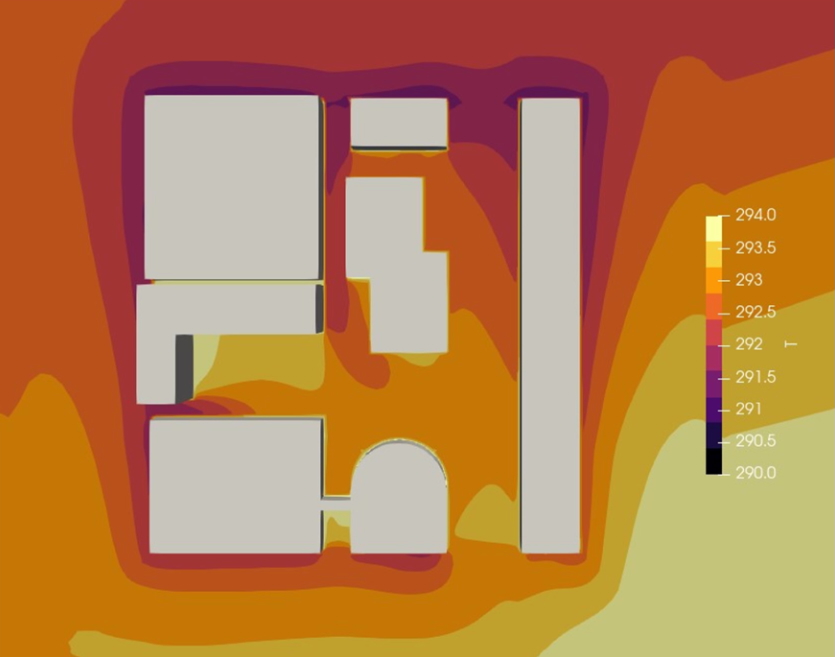 Incorporating Convective Heat Transfer and Humidity Effects in Urban Microclimate Modeling: Should we care?Sina Rahimi, Patrick Kastner, and Umberto BerardiBuilding and Environment, Jul 2025
Accurate microclimate data, obtained through observation or CFD models, is crucial for urban design and environmental improvements. One approach to quantifying microclimate conditions involves the use of isothermal CFD simulations combined with convective heat transfer and relative humidity modeling, implemented via the buoyantHumidityPimpleFoam solver in OpenFOAM. This research investigates the additional complexity when incorporating these factors into unsteady-state modeling for urban microclimate simulations. This study reports the approaches through simulations employing a simplified canyon model. The study site is the campus of the Toronto Metropolitan University campus in Toronto, Ontario, Canada. The simulation data is validated using real-time data collected from the weather station located on the roof of one of the buildings on the downtown campus. By comparing the simulated data with real-time observations, the study assesses the effectiveness of the new features and evaluates their suitability for integration into existing urban microclimate modeling frameworks. The results show that adding humidity not only improves the model realism but also greatly increases its ability to predict complex urban microclimate dynamics. These findings highlight the importance of this approach for applications such as thermal comfort optimization, public health planning, and climate resilience strategies, demonstrating its potential to advance urban microclimate simulations.
@article{rahimi2025incorporating,
  title = {Incorporating Convective Heat Transfer and Humidity Effects in Urban Microclimate Modeling: Should we care?},
  author = {Rahimi, Sina and Kastner, Patrick and Berardi, Umberto},
  year = {2025},
  journal = {Building and Environment},
  publisher = {Elsevier},
  pages = {112858},
  url = {https://www.researchgate.net/publication/389890731_Incorporating_Convective_Heat_Transfer_and_Humidity_Effects_in_Urban_Microclimate_Modeling_Should_we_care?},
}


2024
-
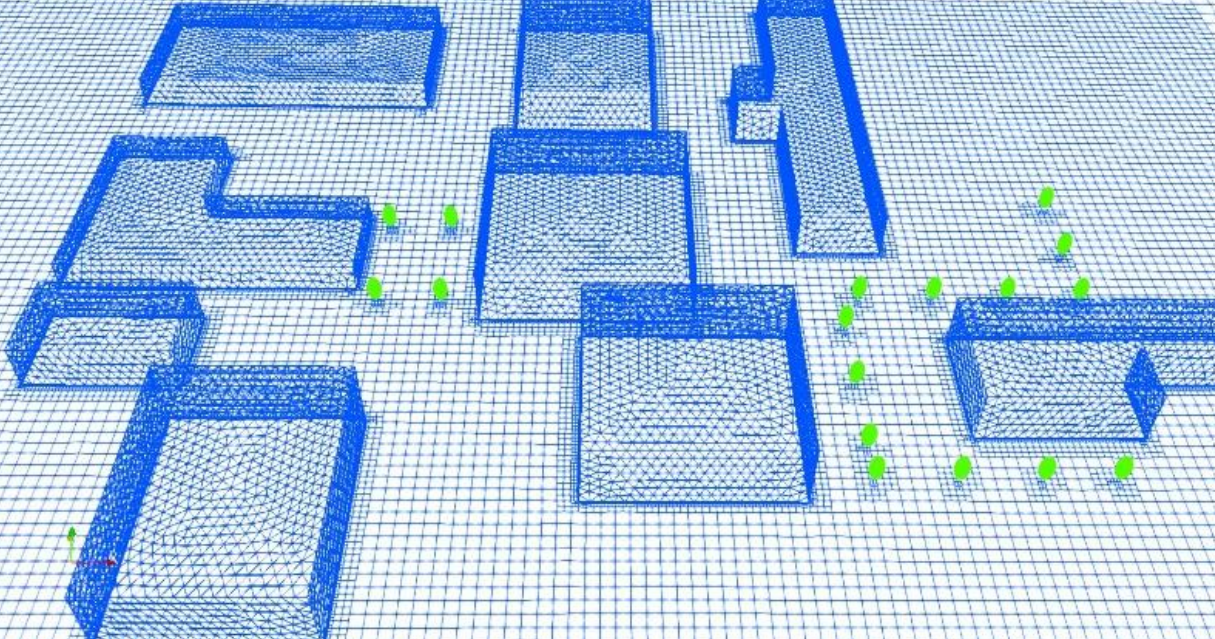 Assessing the Complexity Required for Enhancing Eddy3D: Validation of urbanMicroclimateFoam for Urban Heat Island MitigationIn Proceedings of the IBPC 2024 Conference, Jul 2024
Significant advances in microclimate modeling tools range from no coupling to fully coupled urban physics, requiring a trade-off between simulation speed and accuracy. In this study, we validated the "urbanMicroclimate-Foam" solver for accuracy, an essential step for ensuring reliable modeling enhancements. This involved creating a detailed 3D model and conducting transient simulations, with results compared to weather data collected from on-site weather stations at Georgia Tech. Our future aim is to integrate this approach into the Eddy3D toolkit, enhancing its HAM and VEG modules for microclimate modeling. The results demonstrate the effectiveness and versatility of these methods in various scenarios and complex modeling tasks, contributing to advancing urban climate modeling. This work supports informed decision-making on the urban heat island effect and urban sustainability.
@inproceedings{rahimi2024assessing, title = {Assessing the Complexity Required for Enhancing Eddy3D: Validation of urbanMicroclimateFoam for Urban Heat Island Mitigation}, author = {Rahimi, Sina and Berardi, Umberto and Stone, Brian and Kastner, Patrick}, year = {2024}, month = jul, booktitle = {Proceedings of the IBPC 2024 Conference}, url = {https://www.researchgate.net/publication/384972164_Assessing_the_Complexity_Required_for_Enhancing_Eddy3D_Validation_of_urbanMicroclimateFoam_for_Urban_Heat_Island_Mitigation}, institution = {Georgia Institute of Technology}, } -
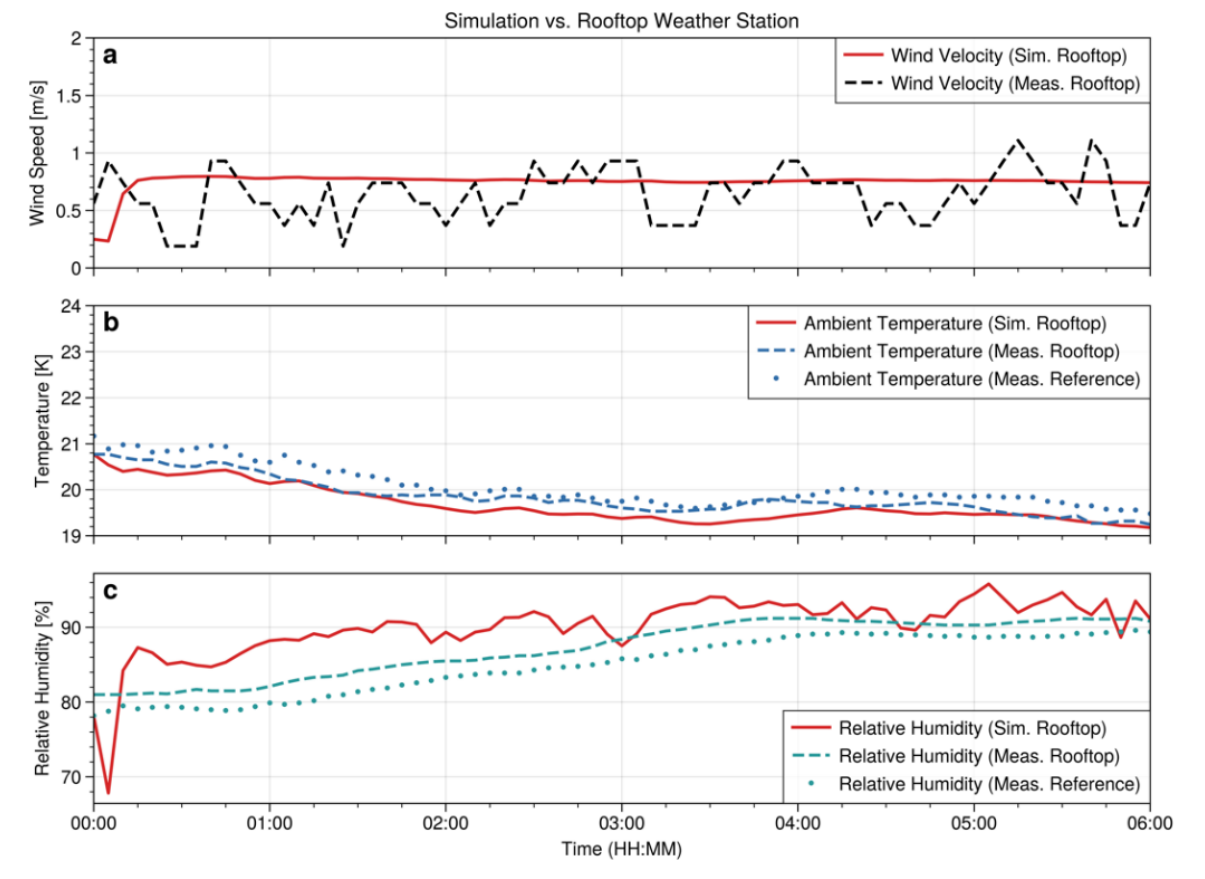 How much computational complexity is necessary to model relevant aspects in microclimate urban physics?Sina Rahimi, Patrick Kastner, and Umberto BerardiIn Proceedings of the IBPC 2024 Conference, Jul 2024
Accurate microclimate data obtained through observation or CFD models is crucial for urban design and environmental improvements. Eddy3D is one of the tools widely used for simulating microclimate conditions. However, the tool currently lacks the incorporation of relevant urban physics into the simulation. The present research focuses on integrating the modeling of convective heat transfer and relative humidity within the Eddy3D wind module and unsteady state modeling. The study reports the approaches through simulations employing a simplified canyon model. The study site is the campus of the Toronto Metropolitan University in Toronto, Ontario. The simulation data is validated using real-time data collected from the weather station located on the roof of one of the buildings on the downtown campus. By comparing the simulated data with the real-time data, the study assesses the effectiveness of the new features and determines their appropriateness for integration into the Eddy3D tool. The findings highlight the adaptability and accuracy of the approach across various scenarios, effectively handling complex modeling to enhance the capabilities of microclimate predictions.
@inproceedings{rahimi2024computational, title = {How much computational complexity is necessary to model relevant aspects in microclimate urban physics?}, author = {Rahimi, Sina and Kastner, Patrick and Berardi, Umberto}, year = {2024}, month = jul, booktitle = {Proceedings of the IBPC 2024 Conference}, url = {https://www.researchgate.net/publication/384971986_How_much_computational_complexity_is_necessary_to_model_relevant_aspects_in_microclimate_urban_physics}, institution = {Georgia Institute of Technology}, } -
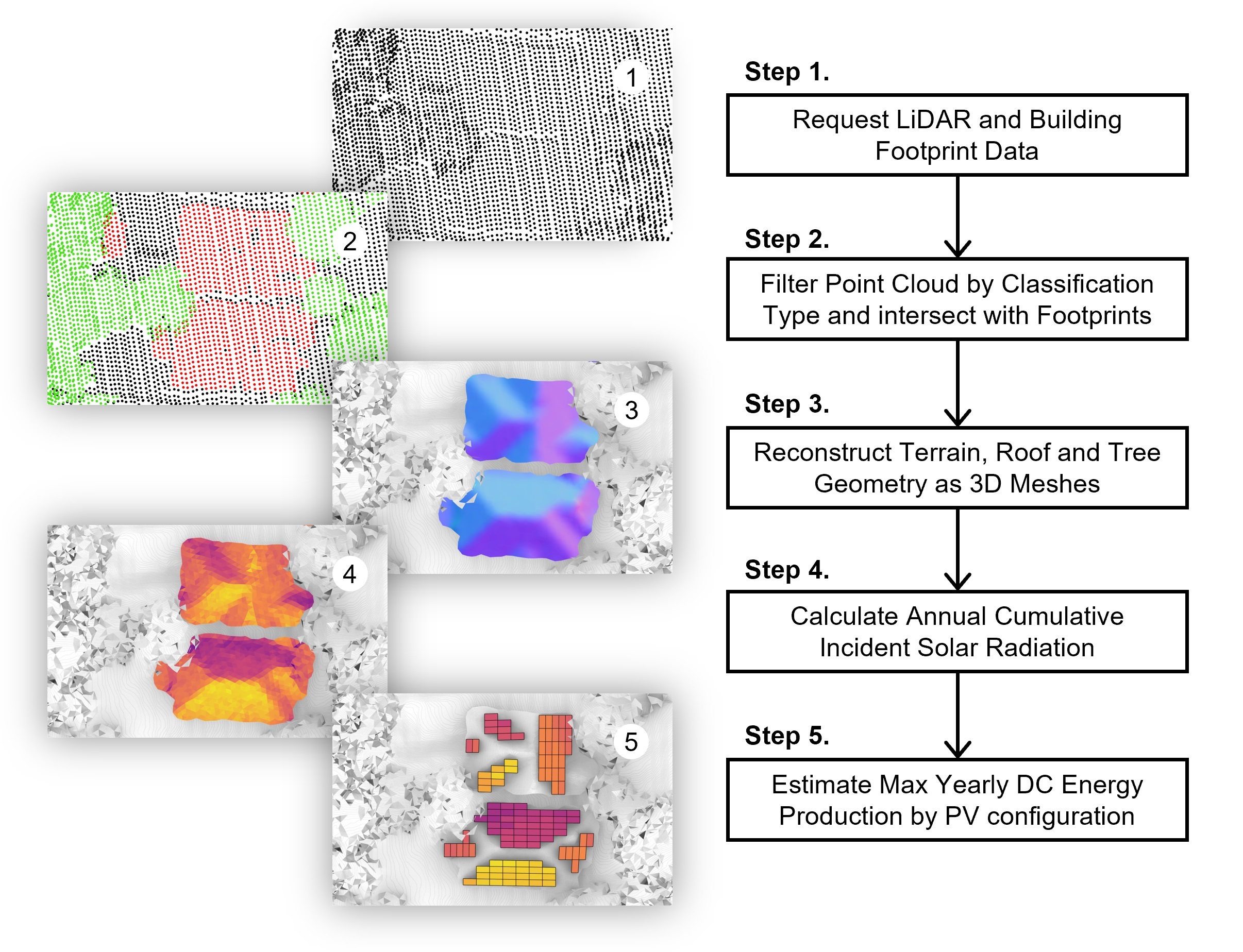 A Computational Framework for Assessing Solar Photovoltaic Potential of Buildings Based on LiDAR and Building Footprint DataSilvia Vangelova and Patrick KastnerIn Proceedings of SIGRADI 2024, Jul 2024
The mass adoption of building-integrated photovoltaics (BIPV) emerges as a promising solution for reducing global greenhouse gas (GHG) emissions. However, using such systems to achieve net zero operational energy at the urban scale requires evaluating the solar potential of thousands of buildings which poses many challenges concerning data availability, quality, and privacy. To address these issues, we present an automated end-to-end framework for querying, combining, and processing publicly available aerial Light Detection and Ranging (LiDAR) and Building Footprint data. Using open-source algorithms for geometry reconstruction and solar radiation analysis, we show how to estimate the maximum annual direct current (DC) electricity yield per building. This framework is designed to enable urban planners, developers, and architects to assess the solar potential of neighborhoods and cities in an accessible way. By enabling effective communication of results, it can help optimize resource allocation and benefit solar adoption initiatives.
@inproceedings{vangelova2024sigradi, title = {A Computational Framework for Assessing Solar Photovoltaic Potential of Buildings Based on LiDAR and Building Footprint Data}, author = {Vangelova, Silvia and Kastner, Patrick}, year = {2024}, booktitle = {Proceedings of SIGRADI 2024}, url = {https://www.researchgate.net/publication/391531694_A_Computational_Framework_for_Assessing_Solar_Photovoltaic_Potential_of_Buildings_Based_on_LiDAR_and_Building_Footprint_Data}, institution = {Georgia Institute of Technology}, } -
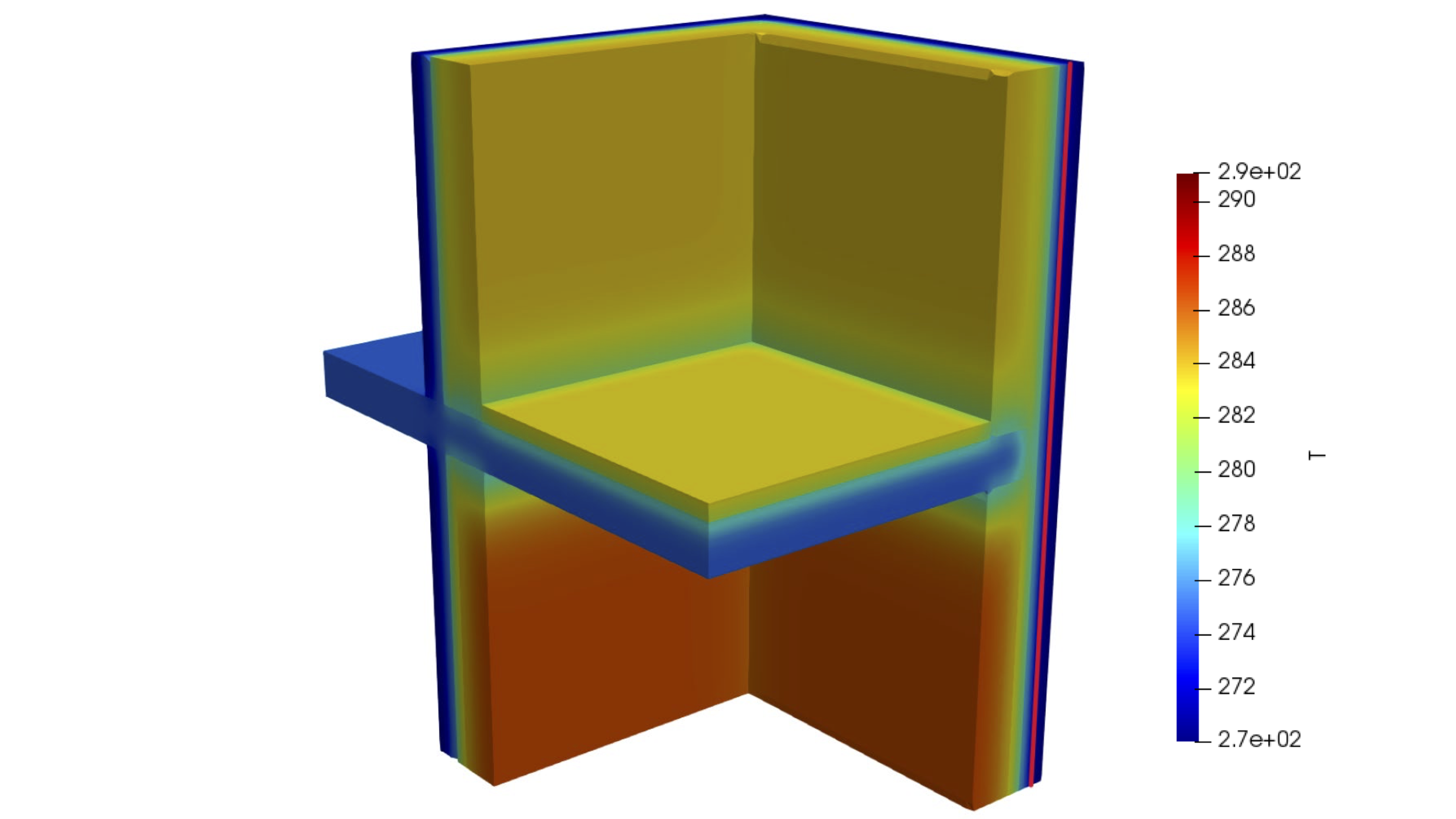 3D Heat Transfer Analysis in Architectural Modeling: A Case Study with OpenFOAMMaryam Almaian and Patrick KastnerIn Proceedings of the IBPC 2024 Conference, Jul 2024
As the global focus on sustainable building practices intensifies, architects face the challenge of designing structures that meet certain aesthetic and functional criteria while minimizing energy consumption. One critical aspect of achieving energy-efficient buildings is the selection of appropriate building materials with optimal thermal properties.The tools and software to simulate 2D heat transfer are available, but often limited in their set of features and cost-prohibitive. The limitations of 2D heat transfer are the inability to simulate and explore complex geometry, corners, and full building envelope analysis. The integration of 3D thermal performance analysis into the architectural design process is an even more complex and underdeveloped area. This thesis aims to address this gap by exploring the use of OpenFOAM to develop a user-friendly tool to simulate building-related heat transfer problems. The outcomes of this thesis aim to empower architects to make informed decisions about material selection, and their impact on energy efficiency, by seamlessly embedding it into the Rhino & Grasshopper CAD environment.
@inproceedings{almaian2024heat, title = {3D Heat Transfer Analysis in Architectural Modeling: A Case Study with OpenFOAM}, author = {Almaian, Maryam and Kastner, Patrick}, year = {2024}, booktitle = {Proceedings of the IBPC 2024 Conference}, url = {https://www.researchgate.net/publication/386574076_3D_Heat_Transfer_Analysis_in_Architectural_Modeling_A_Case_Study_with_OpenFOAM}, institution = {Georgia Institute of Technology}, } -
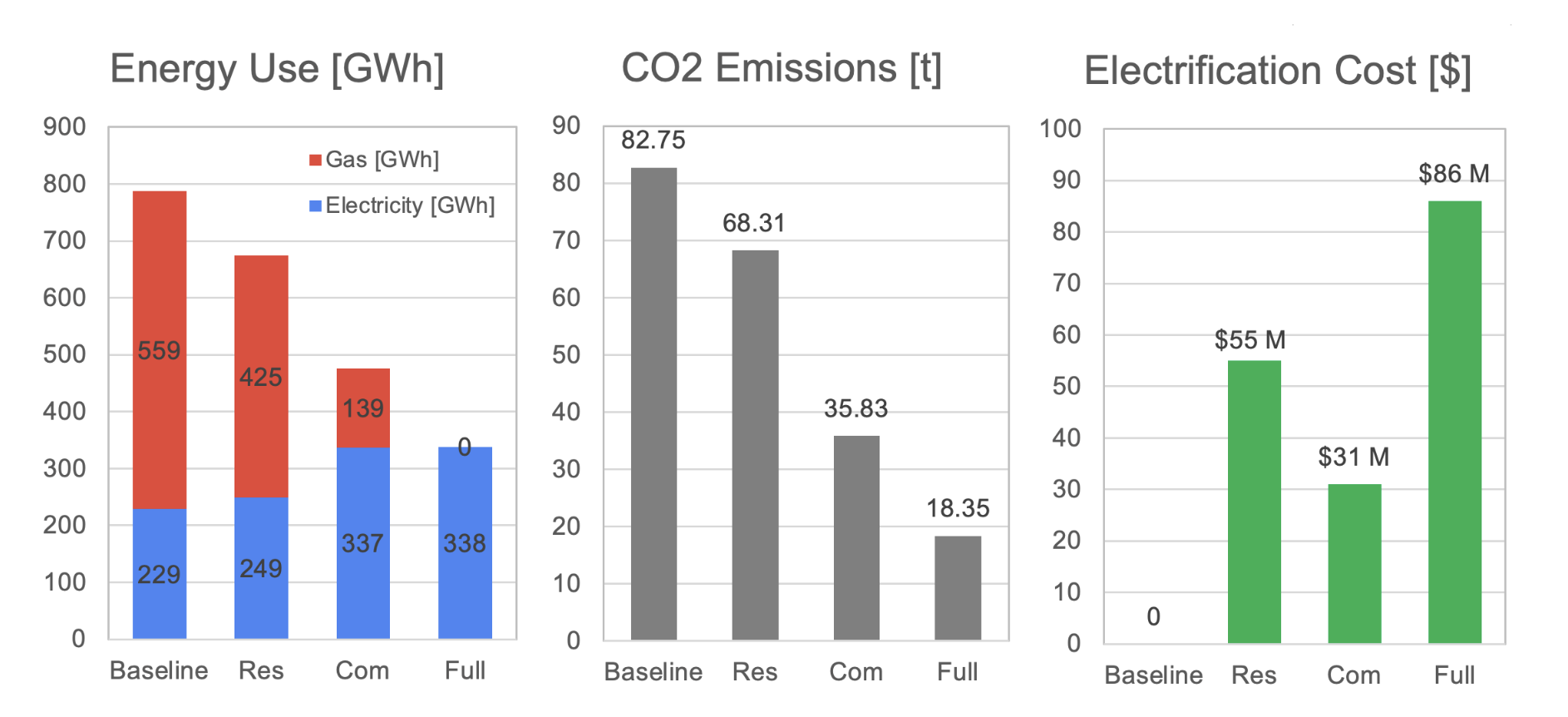 Impact and Cost Analysis of Thermal Load Electrification Measures using Automated Urban Building Energy Modeling in Ithaca, NYTimur Dogan, Patrick Kastner, Hung Ming Tseng, Kewei Curtis Xu, and 1 more authorIn Proceedings of IBPSA-USA, SimBuild 2024, May 2024
Building decarbonization is an urgent, cross-disciplinary challenge. Holistic urban building energy models (UBEM) could enable planners and municipal government to see the bigger picture and allow for data-driven and community-engaged planning. However, UBEM adoption remains rare, especially in smaller cities, due to technical complexity, lack of data availability, and data sharing on building stock properties and energy use. This paper describes a fully automated bottom-up UBEM simulation approach that fuses geospatial municipal building records, utility billing data, and DOE BEM-derived templates for rapid and building-specific energy scenario simulation using a lower-order 5R1C model. The methods for data fusion, simulation, and result post-processing were tested successfully on a small city decarbonization case study, demonstrating feasibility and accuracy for multi-objective/stakeholder decision-making methodologies to accelerate building stock decarbonization.
@inproceedings{dogan2024impact, title = {Impact and Cost Analysis of Thermal Load Electrification Measures using Automated Urban Building Energy Modeling in Ithaca, NY}, author = {Dogan, Timur and Kastner, Patrick and Tseng, Hung Ming and Xu, Kewei Curtis and Others}, year = {2024}, month = may, booktitle = {Proceedings of IBPSA-USA, SimBuild 2024}, address = {Denver, Colorado}, url = {https://www.researchgate.net/publication/389174008_Impact_and_Cost_Analysis_of_Thermal_Load_Electrification_Measures_using_Automated_Urban_Building_Energy_Modeling_in_Ithaca_NY}, } -
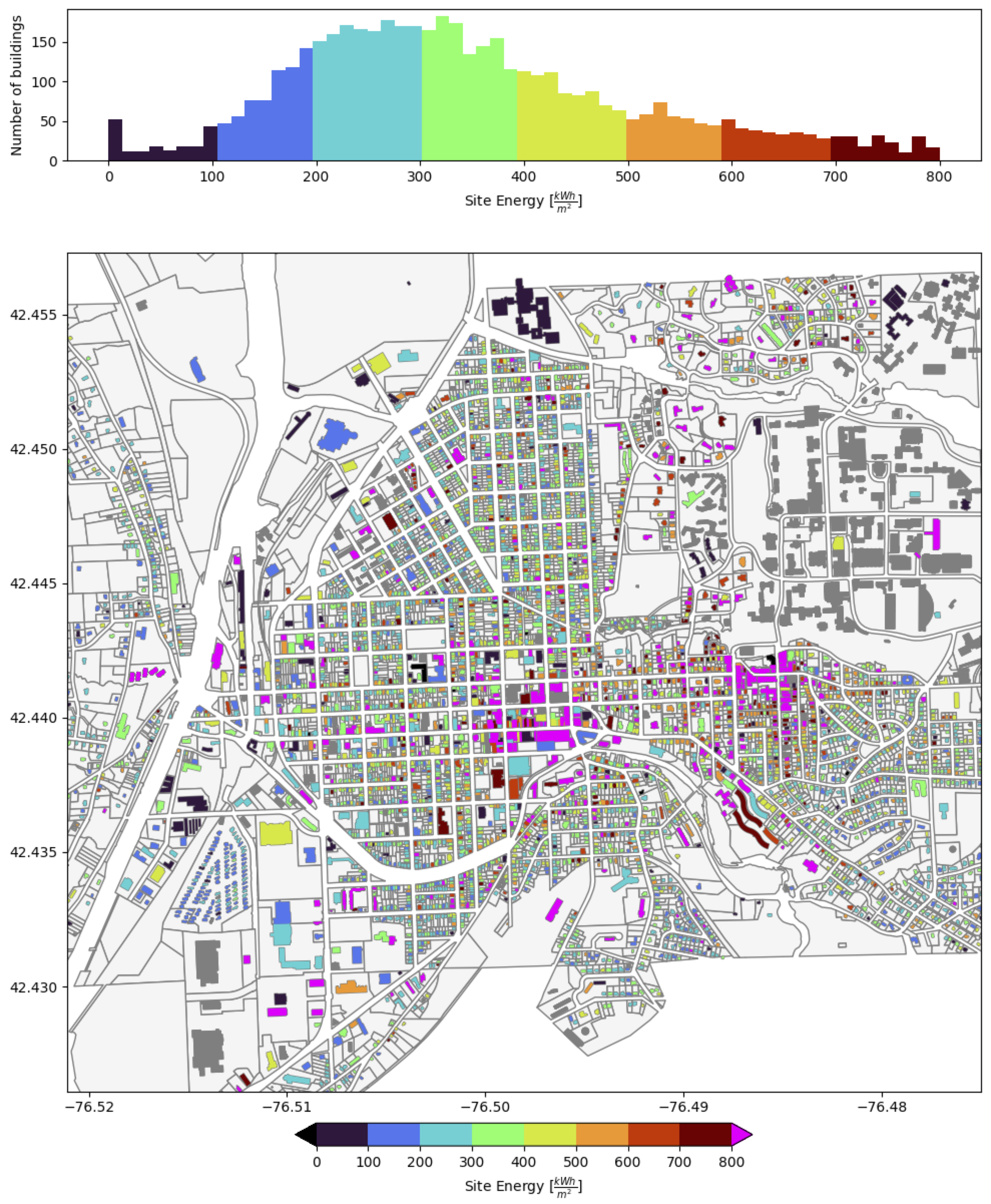 Towards auto-calibrated UBEM using readily available, underutilized urban data: A case study for Ithaca, NYPatrick Kastner and Timur DoganEnergy and Buildings, May 2024
The shift toward urban decarbonization, which involves transitioning to heat pumps and integrating photovoltaic (PV) energy generation, poses substantial challenges to electricity grids in cities. Ithaca, NY, with its commitment to the Green New Deal, serves as a case study for cities confronted with these challenges. This paper explores how various building electrification scenarios might affect Ithaca’s net-zero ambitions. We show that our reduced-order Urban Building Energy Modeling (UBEM) approach can accurately predict building energy consumption and rooftop solar PV energy generation for the 6114 buildings in the City of Ithaca. Building on that, we present three increasingly ambitious decarbonization scenarios that offer a holistic perspective on Ithaca’s future electrification potential. In automating the reconstruction of building geometry from readily available LiDAR data, along with automated BEM setup and calibration, our methodology offers a robust toolkit to plan holistic decarbonization efforts. We argue that our approach, which forecasts both UBEM and PV for all residential and commercial buildings within a single framework, provides insights that cannot be reached with siloed methods. In the future, we believe that the abundance of readily available urban data sets will allow us to transition our approach to other jurisdictions across the US.
@article{kastner2024towards, title = {Towards auto-calibrated UBEM using readily available, underutilized urban data: A case study for Ithaca, NY}, author = {Kastner, Patrick and Dogan, Timur}, year = {2024}, journal = {Energy and Buildings}, publisher = {Elsevier}, pages = {114286}, url = {https://www.researchgate.net/publication/381057691_Towards_auto-calibrated_UBEM_using_readily_available_underutilized_urban_data_A_case_study_for_Ithaca_NY}, } -
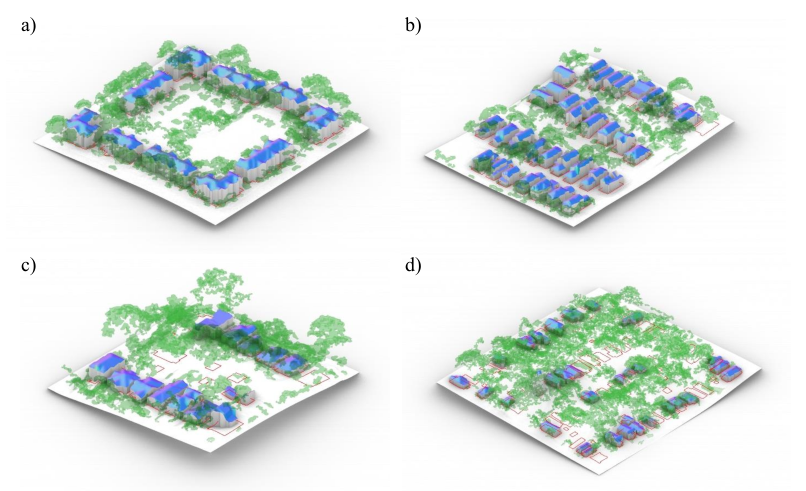 LiDAR data for enriching open geospatial building datasets: implications for urban building energy modelingSilvia Vangelova and Patrick KastnerSep 2024
@misc{vangelova2024gni, title = {LiDAR data for enriching open geospatial building datasets: implications for urban building energy modeling}, author = {Vangelova, Silvia and Kastner, Patrick}, year = {2024}, month = sep, booktitle = {Abstract for the GNI Symposium \& Expo on Artificial Intelligence for the Built World}, address = {Technical University of Munich}, organization = {GNI Symposium}, }


2023
-
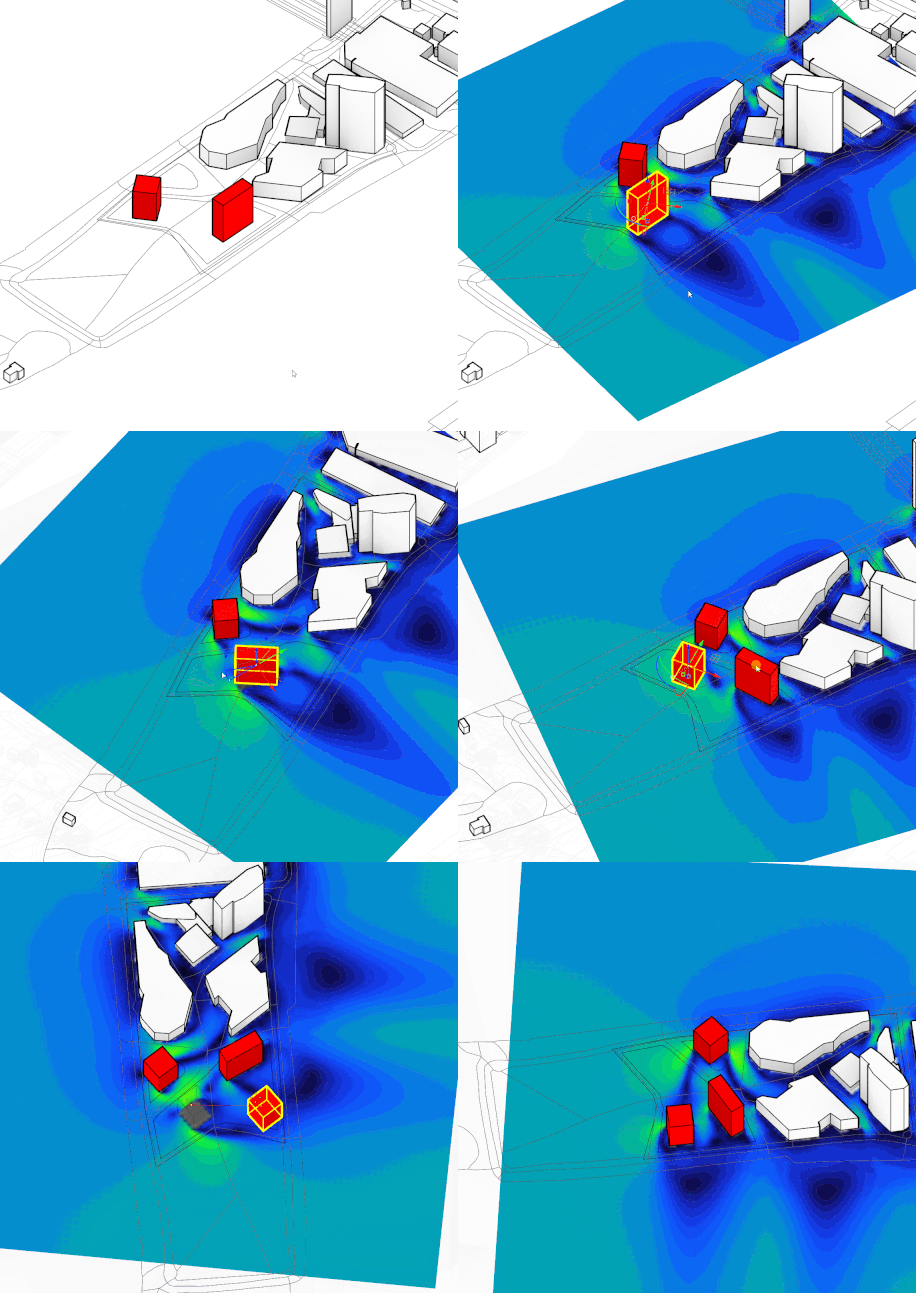 A GAN-based Surrogate Model for Instantaneous Urban Wind Flow PredictionPatrick Kastner and Timur DoganBuilding and Environment, Sep 2023
Urban form impacts the airflow patterns in cities and the resulting urban microclimate. This has significant implications for ventilation, overheating, wind chill, and safety concerns such as down drafts from skyscrapers. While Computational Fluid Dynamics (CFD) simulations are the best practice for analyzing urban airflow patterns in design, they are computationally expensive and require a high level of expertise, making them underutilized in the early design process. This paper presents a surrogate model for CFD using a Generative Adversarial Network (GAN) that can process arbitrary building geometries. The model is trained using an automated end-to-end pipeline based on Eddy3D and implemented within the Rhino and Grasshopper environment as an Open Neural Network Exchange (ONNX)-based CFD-GAN predictor. This workflow provides instantaneous simulation feedback within the design software, reduces the risk of user error, and allows for appropriate spatial resolution in early design. The CFD-GAN has demonstrated promising accuracy, with a Structural Similarity Index Measure (SSIM)4 range of 75%–97% on a limited training dataset of 564 unique urban geometries. Although the model currently has limitations regarding accuracy in complex urban wake regions, we show that these are likely not of concern for outdoor thermal comfort analyses. While it cannot replace CFD in later design stages, the CFD-GAN facilitates the incorporation of urban airflow analysis in early design with minimal effort and instantaneous performance feedback.
@article{kastner2023gan,
  title = {A GAN-based Surrogate Model for Instantaneous Urban Wind Flow Prediction},
  author = {Kastner, Patrick and Dogan, Timur},
  year = {2023},
  journal = {Building and Environment},
  publisher = {Elsevier},
  pages = {110384},
  url = {https://www.researchgate.net/publication/371631167_A_GAN-based_surrogate_model_for_instantaneous_urban_wind_flow_prediction},
}

2021
-
 Eddy3D: A toolkit for decoupled outdoor thermal comfort simulations in urban areasPatrick Kastner and Timur DoganBuilding and Environment, Sep 2021
The architectural community needs holistic, evidence-based planning tools to promote urban resilience in the face of global warming. To ensure maximum impact, simulation-driven microclimate analysis methods must be integrated early in the design process. With Eddy3D, we present a toolkit to simulate outdoor thermal comfort (OTC) metrics with a decoupled approach. We motivate the decoupled systems framework with meteorological measurements and local and global sensitivity analyses of three different climates. For a real-world case study on a university campus, we present results for both wind velocity and mean radiant temperature simulations. Finally, we discuss the advantages and disadvantages of a decoupled simulation approach considering design aiding and the architectural community. Our findings support reduced simulation time and flexibility, with the caveat of reduced accuracy due to neglecting forced convection, albeit this being less relevant in the early stages of design. The framework presented in this manuscript has been implemented and released as Eddy3D, a plugin for Rhino & Grasshopper.
@article{Kastner2021eddy3d, title = {Eddy3D: A toolkit for decoupled outdoor thermal comfort simulations in urban areas}, author = {Kastner, Patrick and Dogan, Timur}, year = {2021}, journal = {Building and Environment}, pages = {108639}, doii = {https://doii.org/10.1016/j.buildenv.2021.108639}, issn = {0360-1323}, url = {https://www.researchgate.net/publication/356780551_Eddy3D_A_toolkit_for_decoupled_outdoor_thermal_comfort_simulations_in_urban_areas}, keywords = {Case study, Design, Outdoor environment, Thermal comfort, Solar, Wind}, } -
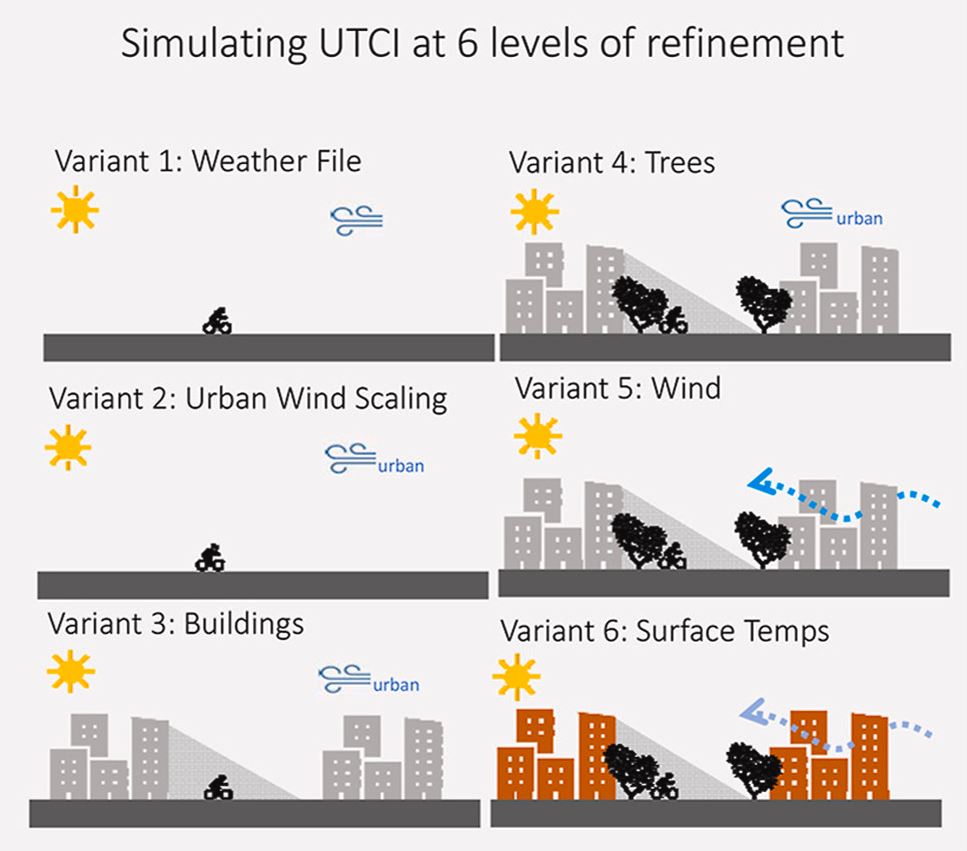 Modeling Outdoor Thermal Comfort along Cycling Routes at Varying Levels of Physical Accuracy to Predict Bike Ridership in Cambridge, MABuilding and Environment, Sep 2021
The Universal Thermal Climate Index (UTCI) has been linked to outdoor activity patterns and used to evaluate the effectiveness of urban interventions to improve thermal comfort. This study investigates how simulating the urban environment at increasing levels of physical accuracy impacts UTCI values along three cycling routes in Cambridge, Massachusetts. Baseline UTCI values are estimated using a local weather file, and the following increments in physical accuracy are considered: wind-scaling, shading from buildings, shading and cooling from trees, computational fluid dynamics simulations for wind speeds, and simulated surface temperatures. With bike ridership data from Bluebikes, Boston’s bike-sharing program, the relationship between bike ridership patterns and UTCI values along each route is studied. Supervised machine learning models are applied to predict bike ridership based on UTCI and other predictors. UTCI simulation results show that incorporating the various increments of accuracy influences hopdfy UTCI values at urban areas and exposed areas differently. Incorporating local wind speeds is especially impactful for urban areas. The statistical models trained to predict hopdfy bike trip counts based on UTCI and other demand and weather predictors achieved a root-mean-squared error of 1.06 trips. 47% of predictions were correct, and an additional 42% of predictions were off by 1 trip. This study demonstrates the importance of spatial refinement in simulating UTCI, and motivates future research into efficient simulation methods or rules-of-thumb for deriving spatial-temporal UTCI values. Future work into building a robust predictive model would motivate the design of thermally comfortable environments for human-powered transportation in cities.
@article{young2021modeling, title = {Modeling Outdoor Thermal Comfort along Cycling Routes at Varying Levels of Physical Accuracy to Predict Bike Ridership in Cambridge, MA}, author = {Young, Elizabeth and Kastner, Patrick and Dogan, Timur and Chokhachian, Ata and Mokhtar, Sarah and Reinhart, Christoph}, year = {2021}, journal = {Building and Environment}, publisher = {Elsevier}, pages = {108577}, url = {https://www.researchgate.net/publication/356303248_Modeling_outdoor_thermal_comfort_along_cycling_routes_at_varying_levels_of_physical_accuracy_to_predict_bike_ridership_in_Cambridge_MA}, } -
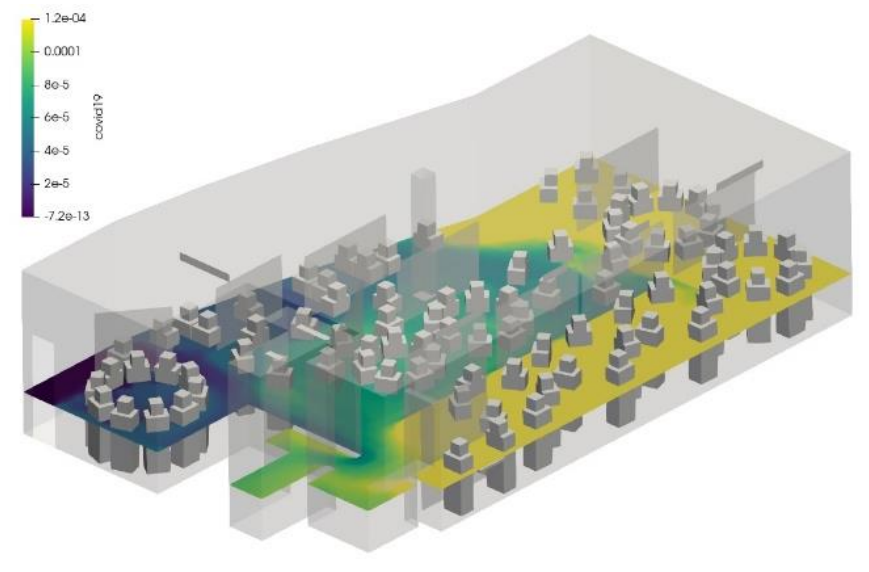 Towards Safer Work Environments During the COVID-19 Crisis: A Study Of Different Floor Plan Layouts and Ventilation Strategies Coupling OpenFOAM and Airborne Pathogen Data for Actionable, Simulation-based Feedback in DesignZoe De Simone, Patrick Kastner, and Timur DoganIn Building Simulation Conference Proceedings, Sep 2021
As work environments struggle to reopen during the current COVID-19 pandemic, it is crucial to establish practical decision-aiding tools. While a strong emphasis has been placed on determining generic guidelines to reduce the risk of airborne viral spread, there is a lack of free and easy-to-use simulation workflows to quantify indoor air quality and the risk of airborne pathogens indoors at a spatial resolution that can take into account floor-plan layouts, furniture, and ventilation inlet-outlet positions. This paper describes the development of a new, free, early design tool that allows designers and other stakeholders to simulate and compare viral airborne concentration under different indoor conditions. The tool leverages OpenFOAM-based Computational Fluid Dynamics (CFD) and a passive scalar simulation approach to allow architects and interior designers to quantify airborne pathogens’ exposure. The tool is integrated into the popular Rhino3d & Grasshopper CAD environment to facilitate its application in fast-paced design processes. We demonstrate good agreement compared to a CFD benchmark test. Further, we validate newly developed COVID-19 capabilities by comparing our results to an existing restaurant case study that included tracer gas measurements and validation using Fluent (Ansys). We demonstrate applications of the tool in a comparative study of a restaurant that investigates how plan and furniture layout interventions, ventilation strategies can impact the movement of airborne pathogens in indoor environments.
@inproceedings{DeSimone2021, title = {Towards Safer Work Environments During the COVID-19 Crisis: A Study Of Different Floor Plan Layouts and Ventilation Strategies Coupling OpenFOAM and Airborne Pathogen Data for Actionable, Simulation-based Feedback in Design}, author = {{De Simone}, Zoe and Kastner, Patrick and Dogan, Timur}, year = {2021}, booktitle = {Building Simulation Conference Proceedings}, url = {https://www.researchgate.net/publication/351880927_Towards_Safer_Work_Environments_During_the_COVID-19_Crisis_A_Study_Of_Different_Floor_Plan_Layouts_and_Ventilation_Strategies_Coupling_Open_FOAM_and_Airborne_Pathogen_Data_2_for_Actionable_Simulation-}, } -
 Surfer: A Fast Simulation Algorithm to Predict Surface Temperatures and Mean Radiant Temperatures in Large Urban ModelsTimur Dogan, Patrick Kastner, and Remy MermelsteinBuilding and Environment, Sep 2021
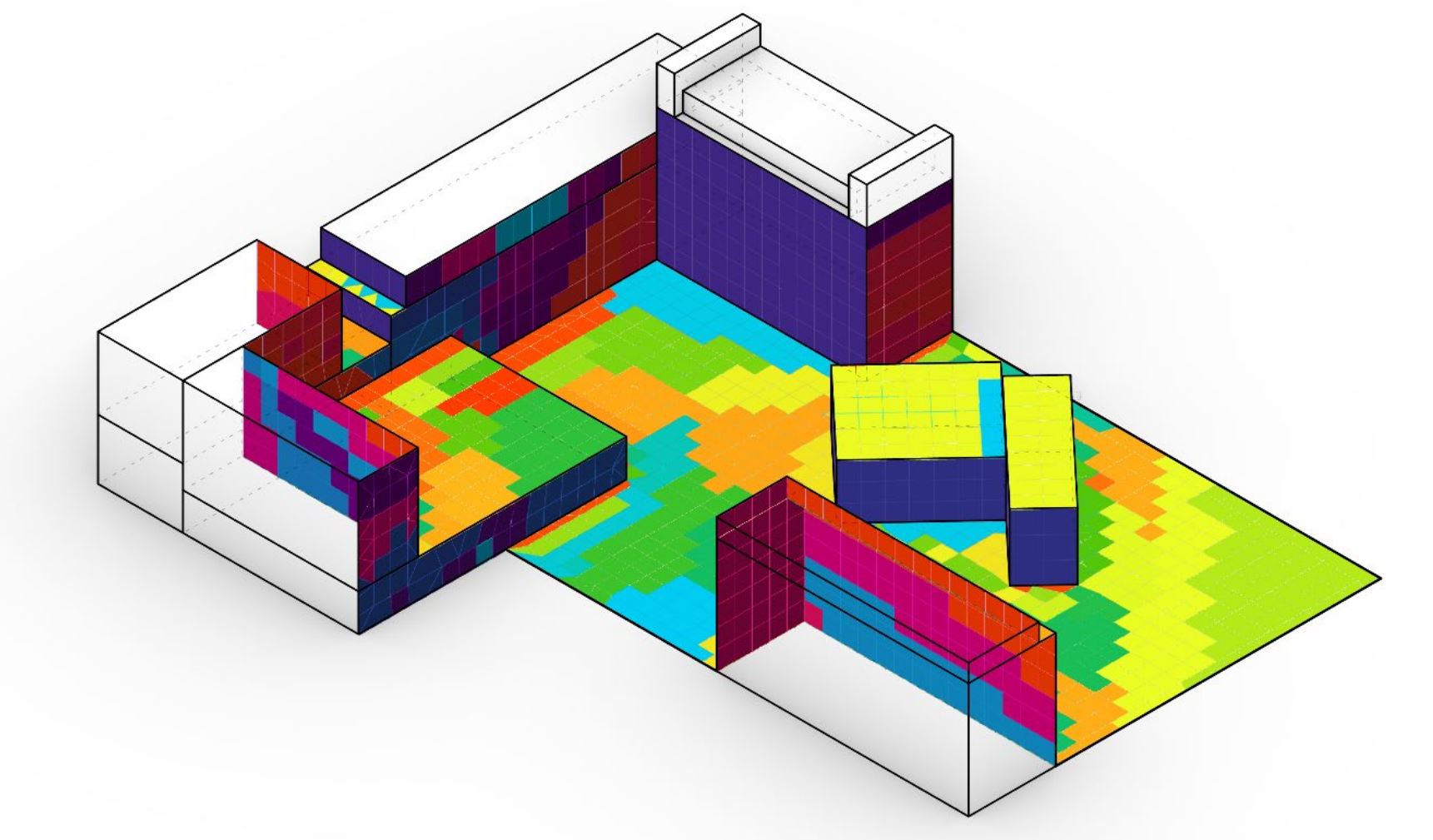
Outdoor thermal comfort simulation simulations rely on the mean radiant temperature (MRT) seen by pedestrians as an important input that remains difficult to compute. Especially for large urban models, computing relevant surface temperatures and radiation fluxes that make up the MRT is a daunting task in terms of simulation setup and the computational overhead. We propose a new algorithm to estimate exterior surface temperatures of building facades, roofs, and ground surfaces in an arbitrary urban 3D model. The algorithm discretizes all model surfaces and clusters them by material properties and sky and sun exposure to reduce computational complexity. The model setup is fully automated, and the algorithm is implemented in the popular Rhino3d CAD environment. We demonstrate the accuracy of the algorithm by comparing both the resulting external surface temperatures against a high-fidelity simulation and the final MRT against real-world measurements. We report an RMSE of 1.8\degC and 2.0\degC, respectively, while reducing simulation times by a factor of 80. Envisioned applications of the algorithm range from rapid microclimate simulations in fast-paced urban design processes to large scale urban comfort evaluation of existing cities.
@article{DOGAN2021surfer,
  title = {Surfer: A Fast Simulation Algorithm to Predict Surface Temperatures and Mean Radiant Temperatures in Large Urban Models},
  author = {Dogan, Timur and Kastner, Patrick and Mermelstein, Remy},
  year = {2021},
  journal = {Building and Environment},
  pages = {107762},
  doii = {https://doii.org/10.1016/j.buildenv.2021.107762},
  issn = {0360-1323},
  url = {https://www.researchgate.net/publication/350385969_Surfer_A_fast_simulation_algorithm_to_predict_surface_temperatures_and_mean_radiant_temperatures_in_large_urban_models},
  keywords = {Comfort, Surface-temperature, Mean-radiant-temperature, Urban, Design, Microclimate},
}


2020
-
 Predicting Space Usage by Multi-Objective Assessment of Outdoor Thermal Comfort around a University CampusPatrick Kastner and Timur DoganIn SimAUD 2020 Proceedings, Sep 2020
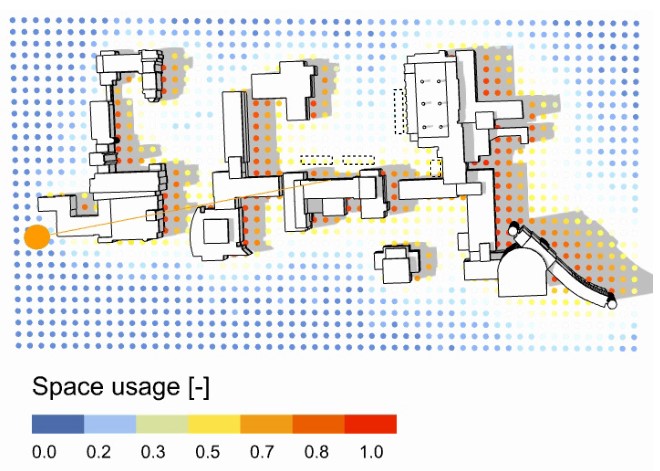
With the impending issues regarding global warming, urban design is considered a key driver to improve the microclimate in cities. For public spaces, studies suggest that outdoor thermal comfort may be seen as a proxy for space usage, and in turn, its attractiveness to people. Although the topic has gained interest in recent years, the discussion so far has focused on computing the metrics rather than deriving interventions from them. Here, we use the tool Eddy3D to model and analyze the outdoor thermal comfort of a designated area around a university campus. Further, we demonstrate how to estimate space usage from those results. Finally, we conduct a spatial sensitivity analysis of the underlying results as a step towards decision aiding. Our work demonstrates how decision-makers may derive areas where interventions will likely have the largest impact on outdoor thermal comfort performance.
@inproceedings{kastner2020predicting, title = {Predicting Space Usage by Multi-Objective Assessment of Outdoor Thermal Comfort around a University Campus}, author = {Kastner, Patrick and Dogan, Timur}, year = {2020}, booktitle = {SimAUD 2020 Proceedings}, pages = {85--91}, url = {https://www.researchgate.net/publication/346039200_Predicting_space_usage_by_multi-objective_assessment_of_outdoor_thermal_comfort_around_a_university_campus}, } -
 Solving Thermal Bridging Problems for Architectural Applications with OpenFOAMPatrick Kastner and Timur DoganIn SimAUD 2020 Proceedings, Sep 2020
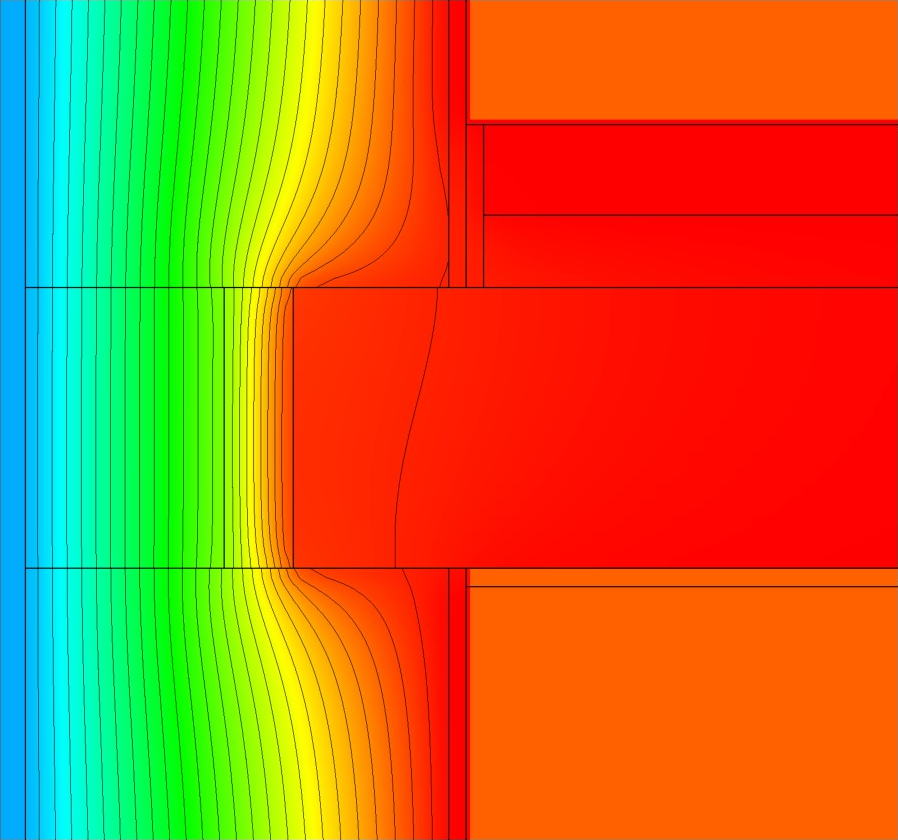
Although recent advancements in computational architecture show promising capabilities, it remains difficult for architects to conduct advanced simulations due to the limited software interoperability. For thermal bridging analyses, the architectural community traditionally relies on specific software tools that are not integrated into a CAD environment. To integrate such analyses into the ongoing design process, we implement a software tool to run heat transfer simulations with OpenFOAM from Grasshopper and Rhinoceros. This paper presents an implementation for box-shaped geometries and compares its results to a thermal bridge analysis from a validated simulation engine. We show that OpenFOAM’s chtMultiregionFoam solver is capable of accurately predicting temperature distributions in a geometry setup with 13 different regions and 8 different materials. In conclusion, we show that heat transfer studies can be highly automated and integrated into an iterative design process.
@inproceedings{kastner2020solving, title = {Solving Thermal Bridging Problems for Architectural Applications with OpenFOAM}, author = {Kastner, Patrick and Dogan, Timur}, year = {2020}, booktitle = {SimAUD 2020 Proceedings}, pages = {405--412}, url = {https://www.researchgate.net/publication/346039320_Solving_Thermal_Bridging_Problems_for_Architectural_Applications_with_OpenFOAM}, } -
 From Energy Performative to Livable Mediterranean Cities: An Annual Outdoor Thermal Comfort and Energy Balance Cross-climatic Typological StudyJournal of Energy and Buildings, Sep 2020
With the rise of awareness of health and well-being in cities, urban environmental analysis should expand from energy performance to new environmental quality-based considerations. The limited potential to annually evaluate outdoor thermal comfort, predominant among these considerations, has restricted the exploration of the interrelations between urban morphology and annual energy performance. This study aims to bridge this gap by capitalizing on the new capabilities of Eddy3D – a Grasshopper plugin which enables effective calculations of hopdfy microclimatic wind factors via OpenFOAM which in turn are used to generate annual outdoor thermal comfort plots. Using this method, a parametric study was conducted for different typology and density scenarios in three different hot climatic contexts in Israel. The automated analytical workflow evaluated a total of 60 design iterations for their energy balance, outdoor thermal comfort autonomy (OTCA) and self-shading levels using the shade index. The high correlation found here between the annual shade index and the OTCA, across all climatic contexts, shows the potential of the shade index to serve as an effective indicator, in these contexts, for comparative or optimization outdoor comfort studies. Further results are both the superiority of the courtyard typology in both energy and outdoor comfort studies, and the contrasting impact of higher density on the annual energy balance (lower performance) and outdoor thermal comfort (higher performance) in hot climates. The annual plots of both the energy balance and OTCA reveal various seasonal and monthly trends in the three different climatic zones which can lead to localized and seasonal urban design strategies.
@article{natanian2020energy, title = {From Energy Performative to Livable Mediterranean Cities: An Annual Outdoor Thermal Comfort and Energy Balance Cross-climatic Typological Study}, author = {Natanian, Jonathan and Kastner, Patrick and Dogan, Timur and Auer, Thomas}, year = {2020}, journal = {Journal of Energy and Buildings}, publisher = {Elsevier}, volume = {224}, pages = {110283}, doii = {10.1016/j.enbuild.2020.110283}, url = {https://www.researchgate.net/publication/342764084_From_Energy_Performative_to_Livable_Mediterranean_Cities_An_Annual_Outdoor_Thermal_Comfort_and_Energy_Balance_Cross-Climatic_Typological_Study}, } -
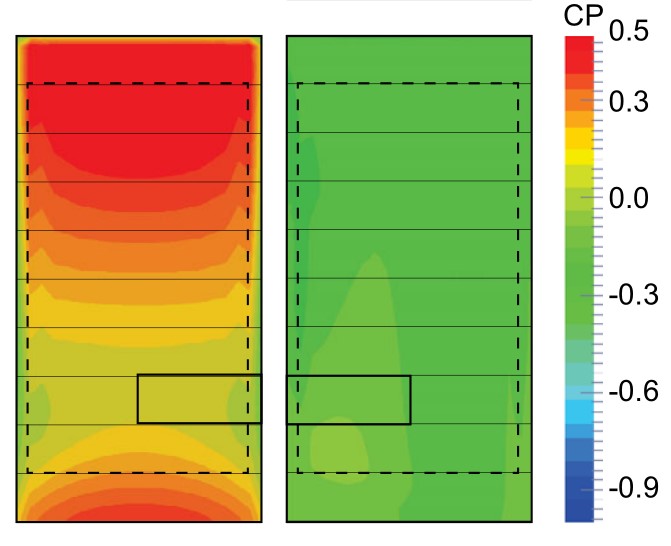 Streamlined CFD Simulation Framework to Generate Wind-pressure Coefficients on Building Facades for Airflow Network SimulationsTimur Dogan and Patrick KastnerJournal of Building Simulation, Sep 2020
Building energy modeling software generally comes with capable airflow network solvers for natural ventilation evaluation in multi-zone building energy models. These approaches rely on pressure coefficient arrays representing different wind directions derived from simple box-shaped buildings without contextual obstructions. For urban or obstructed sites and more complex building shapes, however, further evaluation is needed to avoid geometric oversimplification. In this study, we present an automated and easy-to-use simulation workflow for OpenFOAM-based exterior airflow simulations to generate pressure coefficient arrays for arbitrary building shapes and contextual situations. The workflow is compared to other methods commonly used to obtain pressure coefficients for natural ventilation analysis. Finally, we assess for which climate zones and building types modelers should rely on more accurate CFD-based pressure coefficients and where it may be justifiable to rely on easier and readily available analytical approaches to determine pressure coefficients. Results suggest that existing workflows lead to significant error in predicted comfort hours for climates in the global South and modelers should consider CFD based façade pressure coefficient.
@article{dogan2020streamlined,
  title = {Streamlined CFD Simulation Framework to Generate Wind-pressure Coefficients on Building Facades for Airflow Network Simulations},
  author = {Dogan, Timur and Kastner, Patrick},
  year = {2020},
  journal = {Journal of Building Simulation},
  publisher = {Tsinghua University Press},
  pages = {1--12},
  doii = {10.1007/s12273-020-0727-x},
  url = {https://www.researchgate.net/publication/345942538_Streamlined_CFD_simulation_framework_to_generate_wind-pressure_coefficients_on_building_facades_for_airflow_network_simulations},
}


2019
-
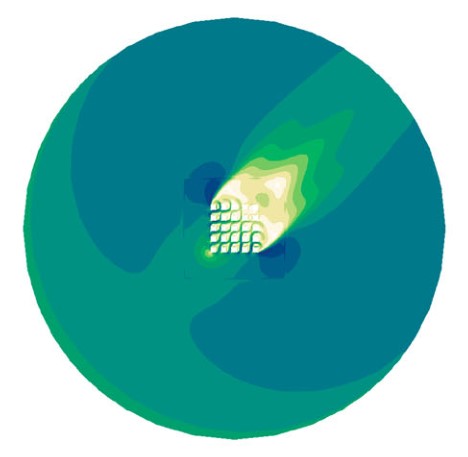 A Cylindrical Meshing Methodology for Annual Urban Computational Fluid Dynamics SimulationsPatrick Kastner and Timur DoganJournal of Building Performance Simulation, Sep 2019
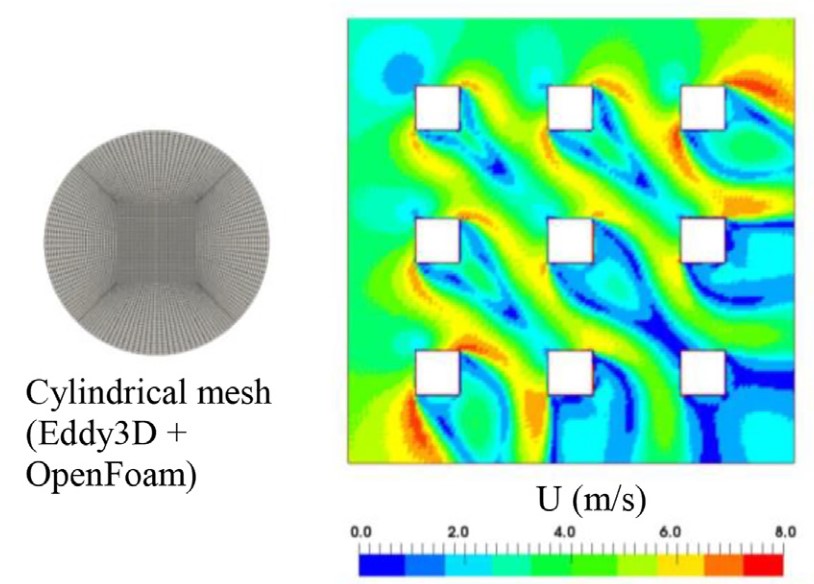
For urban CFD simulations, it is considered a best practice to use a box-shaped simulation domain. Box-shaped domains, however, show drawbacks for airflow from several wind directions as remeshing and additional preprocessing steps become necessary. We introduce a routine to create a cylindrical mesh that expedites the simulation of arbitrary wind directions using OpenFOAM. Results computed with the cylindrical domain are validated against wind tunnel data. We report that the cylindrical method yields comparable results in terms of accuracy and convergence behaviour. Further, run time comparisons in a real-world scenario are conducted to discuss its advantages and limitations. Based on the findings, we recommend using the cylindrical approach if at least eight wind directions are analyzed for which we report 18% run time savings. The cylindrical domain along with automated best practice boundary conditions has been implemented in Eddy3D –– a plugin for Rhinoceros.
@article{kastner2019cylindrical, title = {A Cylindrical Meshing Methodology for Annual Urban Computational Fluid Dynamics Simulations}, author = {Kastner, Patrick and Dogan, Timur}, year = {2019}, journal = {Journal of Building Performance Simulation}, publisher = {Taylor \& Francis}, volume = {13}, number = {1}, pages = {59--68}, doii = {10.1080/19401493.2019.1692906}, url = {https://www.researchgate.net/publication/338030136_A_Cylindrical_Meshing_Methodology_for_Annual_Urban_Computational_Fluid_Dynamics_Simulations}, } -
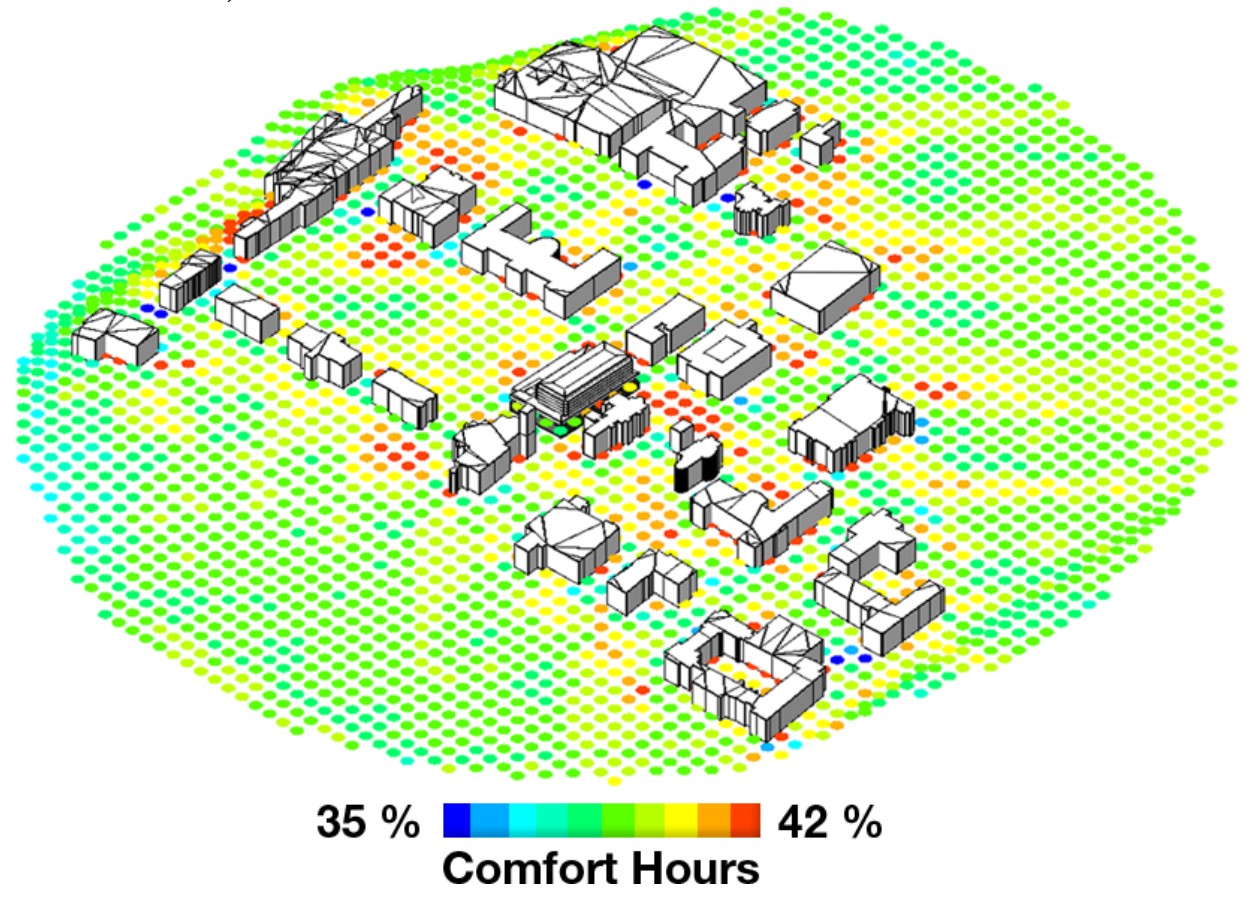 Towards High-Resolution Annual Outdoor Thermal Comfort Mapping In Urban DesignPatrick Kastner and Timur DoganIn Building Simulation Conference Proceedings, Sep 2019
Global warming and increasingly dense cities lead to poor outdoor thermal comfort that may not only be detrimental to our health and well-being but also decreases social and commercial activities. Although workflows for the analysis of thermal comfort exist, they have yet transitioned into the quotidian architectural design process. Our work-flow allows for annual outdoor comfort analyses that are seamlessly integrated into a commonly-used CAD environment. We simulated the annual outdoor thermal comfort on a university campus and discuss which simplifications seem appropriate by means of preliminary on-site measurements. The results exemplify the possibility to conduct such analyses within reasonable time and accuracy if some simplifications to the UTCI estimation are acceptable.
@inproceedings{kastner2019towards,
  title = {Towards High-Resolution Annual Outdoor Thermal Comfort Mapping In Urban Design},
  author = {Kastner, Patrick and Dogan, Timur},
  year = {2019},
  booktitle = {Building Simulation Conference Proceedings},
  url = {https://www.researchgate.net/publication/340463509_Towards_High-Resolution_Annual_Outdoor_Thermal_Comfort_Mapping_In_Urban_Design},
}

2018
-
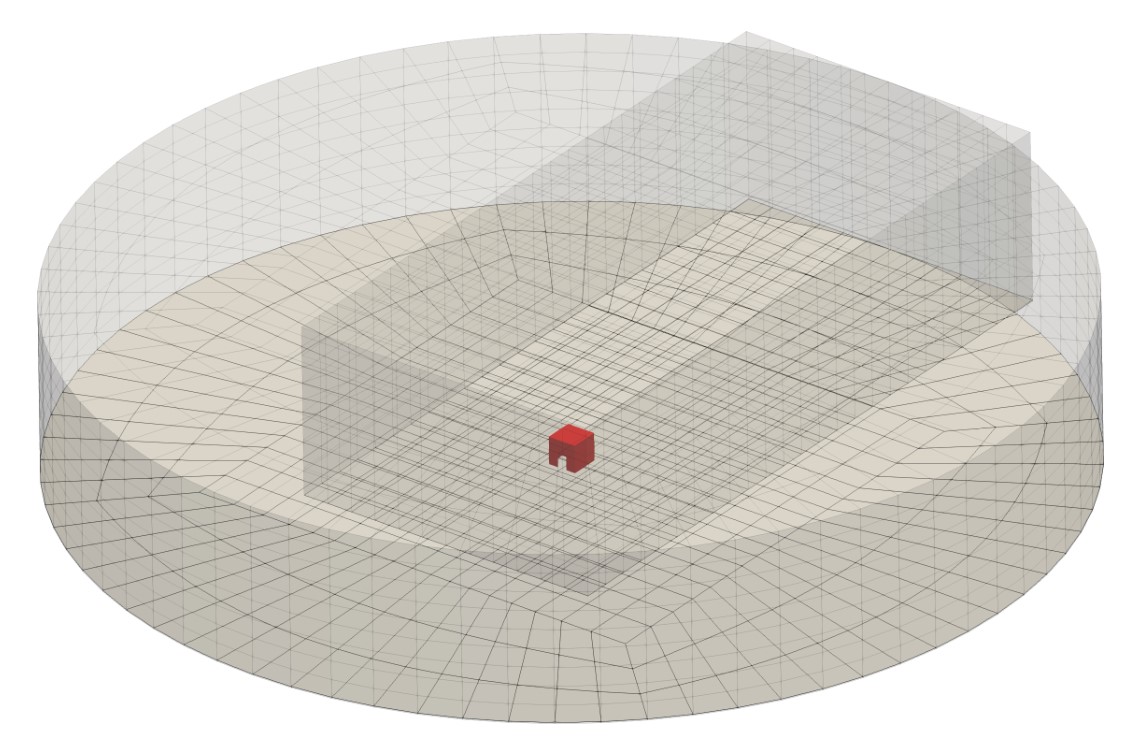 Streamlining Meshing Methodologies for Annual Urban CFD SimulationsPatrick Kastner and Timur DoganIn IBPSA: eSIM Conference Proceedings, Sep 2018
For environmental CFD simulations, it is considered best practice to use a box-shaped wind tunnel as simulation domain. A box-shaped wind tunnel, however, shows drawbacks when it comes to simulating air flow from several wind directions-remeshing and additional preprocessing steps may be necessary and can be considerable time constraints. We utilize a routine implemented in Grasshopper to create a cylindrical computational mesh that allows for the simulation of arbitrary wind directions in a streamlined manner with the open source software OpenFOAM. We estimate the time savings that are possible along with specific mesh properties to take advantage of the proposed method. For validation purposes, commonly used wind tunnel data are presented. A proof of concept tool is implemented in the Rhinoceros CAD modeling environment and will be released publicly.
@inproceedings{kastner2018streamlining, title = {Streamlining Meshing Methodologies for Annual Urban CFD Simulations}, author = {Kastner, Patrick and Dogan, Timur}, year = {2018}, booktitle = {IBPSA: eSIM Conference Proceedings}, url = {https://www.researchgate.net/publication/325023244_Streamlining_meshing_methodologies_for_annual_urban_CFD_simulations}, } -
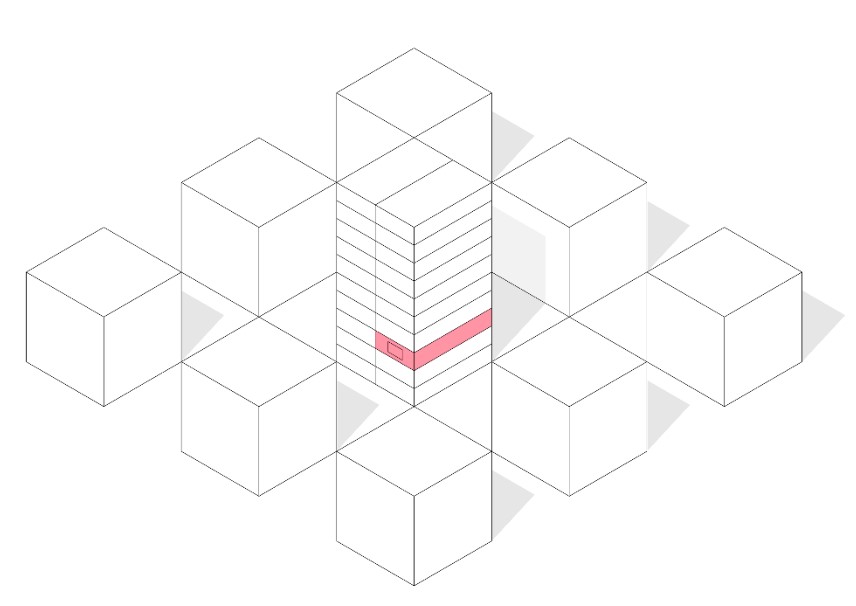 Streamlined CFD Simulation Framework to Generate Wind-Pressure Coefficients on Building Facades for Airflow Network SimulationsTimur Dogan and Patrick KastnerIn IBPC: 7th International Building Physics Conference Proceedings, Sep 2018
Energy modeling packages such as EnergyPlus and TRNSYS come with capable airflow network solvers for natural ventilation evaluation in multi-zone building energy models. These approaches rely on pressure coefficient arrays of different wind directions based on simple box-shaped buildings without contextual obstructions. For specific sites, however, further attention is needed to avoid geometric oversimplification. In this study, we present an automated and easy-to-use simulation workflow for exterior airflow simulation based on OpenFOAM to generate pressure coefficient arrays for arbitrary building shapes and contextual situations. The workflow is compared to other methods commonly used to obtain pressure coefficients for natural ventilation simulation.
@inproceedings{dogan2018streamlined, title = {Streamlined CFD Simulation Framework to Generate Wind-Pressure Coefficients on Building Facades for Airflow Network Simulations}, author = {Dogan, Timur and Kastner, Patrick}, year = {2018}, booktitle = {IBPC: 7th International Building Physics Conference Proceedings}, doii = {10.14305/ibpc.2018.ms-5.05}, url = {https://www.researchgate.net/publication/328028506_Streamlined_CFD_Simulation_Framework_to_Generate_Wind-Pressure_Coefficients_on_Building_Facades_for_Airflow_Network_Simulations}, } -
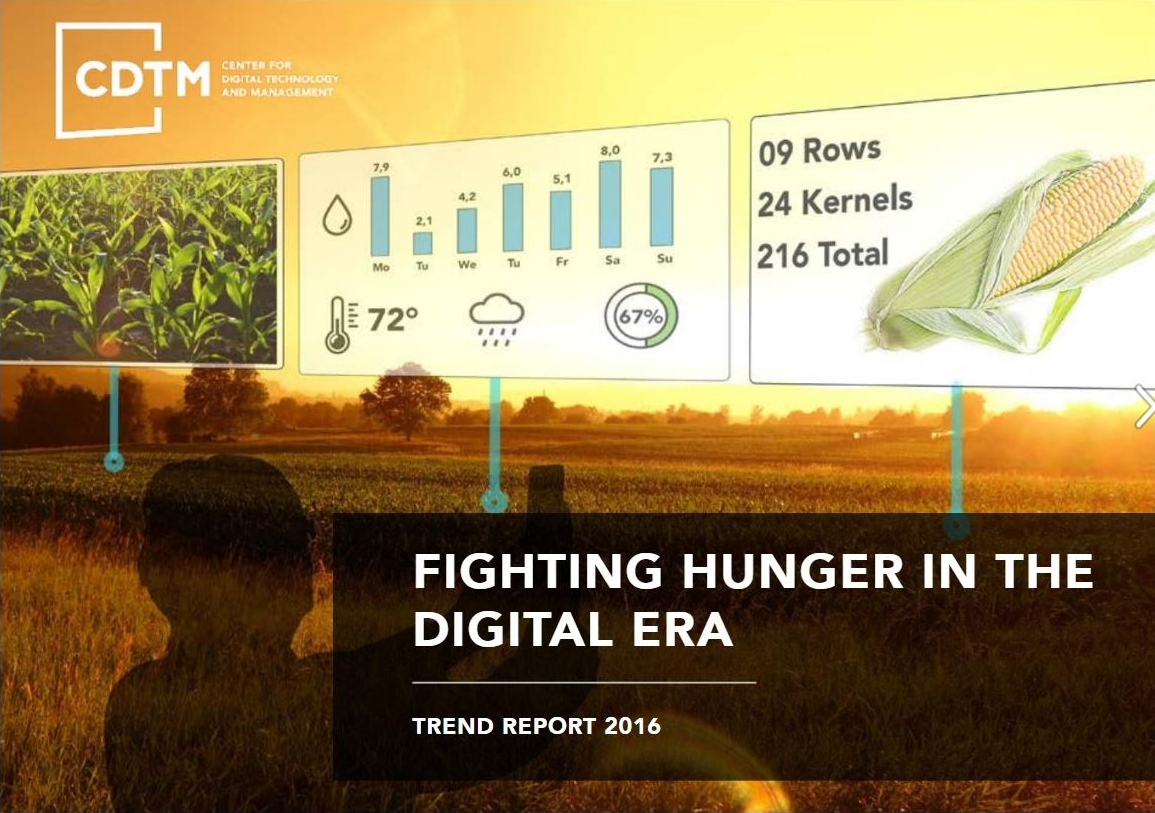 Fighting Hunger in the Digital EraLaurenz Altenmüller, Kim Borrmann, Philip Braun, Yingxi Chen, and 24 more authorsCenter for Digital Technology and Management (CDTM), Sep 2018
This report is the result of the Trend Seminar course, which is part of the interdisciplinary add-on study program in Technology Management at CDTM. About 25 selected students of various disciplines, such as Business Administration, Economics, Psychology, Computer Science, Electrical Engineering, and more work together on a relevant topic related to ICT. Over seven intense weeks of fulltime work, the participating students dive deeply into the topic of the Trend Seminar. Working in several interdisciplinary subteams, students apply the knowledge from their main studies and learn new perspectives from their team members. They conduct trend research, develop scenarios of the future, generate ideas for innovative products or services and detail them out to concrete business concepts.
@article{altenmuller2018fighting,
  title = {Fighting Hunger in the Digital Era},
  author = {Altenm{\"u}ller, Laurenz and Borrmann, Kim and Braun, Philip and Chen, Yingxi and D{\"u}mmling, Tobias and Feuerbacher, Christian and Fr{\"o}hlich, Michael and Gebauer, Jakob and Gebhardt, Christian and Hahn, David and Hesse, Adrian and Hülsemeyer, Christian and Juras, Peter and Kastner, Patrick and Kühl, Josephine and Marquardt, Janis and O'Donnell, MaryClare and Padmakumara, Lakmal and Patz, Martin and Cardona, FerranPla and Rambold, Lukas and Schmidtchen, Hagen and Secules, Chiara and Stanggassinger, Johannes and Wessling, Sophia and Wiggert, Marius and Bechthold, Laura and Lachner, Florian},
  year = {2018},
  journal = {Center for Digital Technology and Management (CDTM)},
  booktitle = {Fighting Hunger in the Digital Era},
  publisher = {Center for Digital Technology and Management},
  number = {CDTM Trend Report 2016},
  url = {https://cms.cdtm.com/assets/675442fc-b0e1-4dda-8836-7d2501bf1de3/CDTM-Trendreport_Spring16.pdf},
}