Climate-Migration Readiness in Atlanta - Missing-Middle Housing
Nitiksha Mota
Climate-Migration Readiness in Atlanta
Missing-Middle Housing + Resilient Infrastructure Simulations
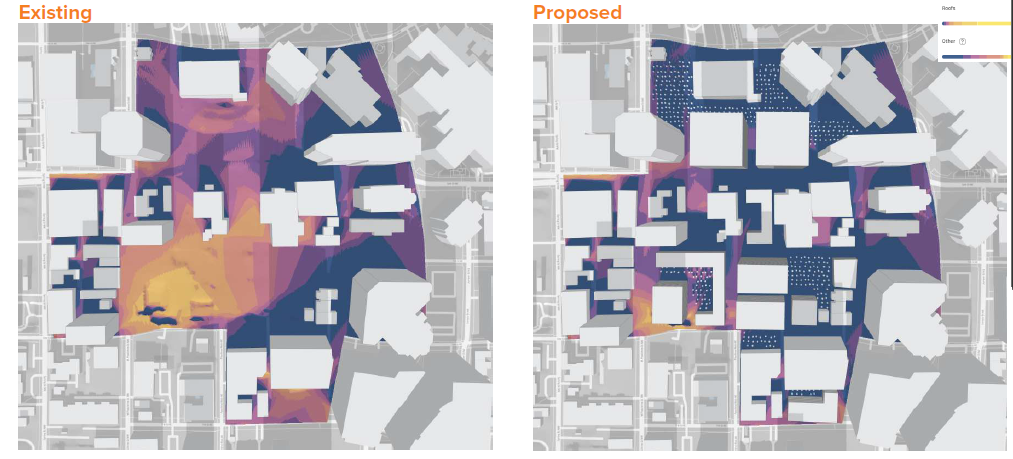
Independent Study – M.S. Urban Design
Author: Nitiksha Mota - LinkedIn
Institution: Georgia Institute of Technology
Advisors: Prof. Brian Stone, Prof. Patrick Kastner
1. Overview
This repository documents a replicable workflow for evaluating how missing-middle housing infill can support climate-migration readiness while balancing environmental resilience in Atlanta neighborhoods.
The study focuses on:
-
Translating zoning and overlay codes into buildable scenarios
-
Testing density increases through ADUs, townhomes, and small multifamily housing
-
Evaluating microclimate, energy, wind, and stormwater impacts using simulation tools
This repo is intended as a guide for future students who want to:
-
Run neighborhood-scale simulations
-
Compare multiple density scenarios
-
Produce policy-relevant, climate-informed urban design analysis
2. Research Question
How can existing zoning frameworks in climate-migration receiving cities like Atlanta be leveraged to increase housing supply while minimizing environmental and microclimatic impacts?
3. Case Study Neighborhoods
| Neighborhood | Role in Study | Development Pattern |
|————-|————-|———————|
| Reynoldstown | Retrofit model | Built-out historic neighborhood |
| Vine City | Rebuild model | Disinvested, vacant-parcel-rich TOD area |
| Midtown | Reference model | Dense, transit-connected urban core |
4. Tools Used
Modeling & Simulation
-
Autodesk Revit – massing + context modeling
-
Autodesk Forma – climate and performance simulations
-
Sun hours
-
Heat stress
-
Wind comfort
-
Solar panel potential
-
Planning & Policy
-
Atlanta Zoning Ordinance (R-5, SPI-19, SPI-16)
-
BeltLine Overlay District regulations
-
MARTA proximity and TOD guidelines
5. Workflow Summary
Step 1 — Define Site Type
Each neighborhood is categorized by growth logic:
-
Retrofit (Reynoldstown): limited vacancy, backyard infill
-
Rebuild (Vine City): block-scale redevelopment
-
Reference (Midtown): contextual benchmark
Step 2 — Translate Zoning Into Design Rules
For each site:
-
Maximum units per lot
-
Height and setback limits
-
Parking requirements or reductions
-
ADU permissions
-
Overlay intent (TOD, walkability, affordability)
This step ensures proposals are code-aligned.
Step 3 — Create Density Scenarios
Each site includes:
-
Existing condition
-
Proposal 1 (moderate infill)
-
Proposal 2 (higher density infill)
Scenarios differ in:
-
Number of units
-
Roof area
-
Tree canopy loss
-
Ground permeability
6. Simulation Workflow (Core of the Study)
6.1 Revit Preparation
Goal: Comparable, clean massing models.
Best practices:
-
Use simple massing (avoid detailed components)
-
Keep ground plane constant across scenarios
-
Maintain consistent building heights
-
Represent trees as simplified canopy objects
-
One Revit file per scenario
6.2 Import to Autodesk Forma
-
Create a Forma site using real address
-
Import Revit massing
-
Verify:
-
Orientation
-
Scale
-
Terrain alignment
-
⚠️ Important: Do not change simulation settings between scenarios.
7. Simulations Performed
A. Sun Hours Analysis
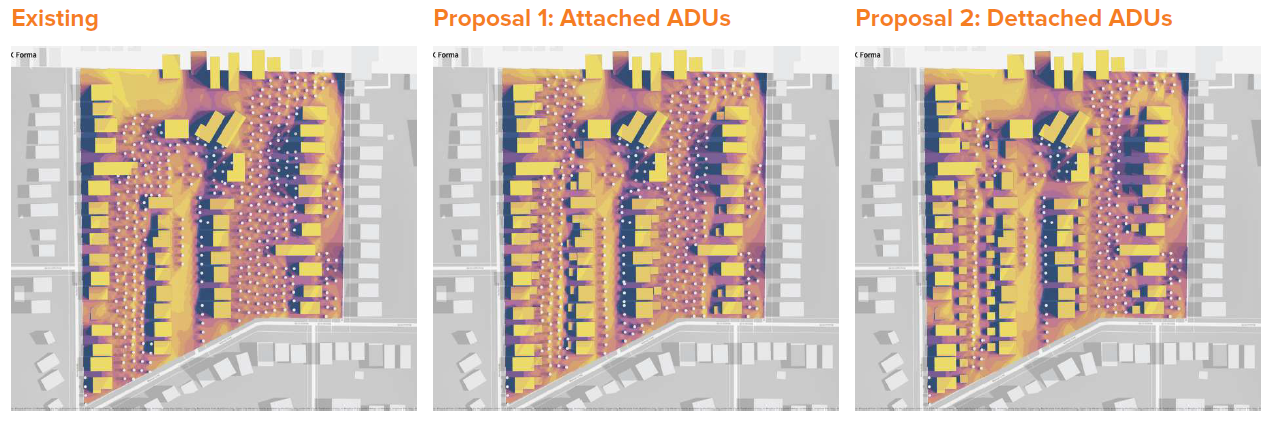
Purpose: Measure daylight tradeoffs caused by density.
Run conditions:
-
Winter Solstice (Dec 21)
-
Summer Solstice (Jul 21)
-
Daytime window (e.g. 8:00–16:00)
Recorded outputs:
-
% ground with ≥ 3 hours sun
-
% facades with ≥ 3 hours sun
-
% roofs with ≥ 3 hours sun
Interpretation focus:
-
Backyard livability
-
Passive solar access
-
Roof usability for PV
B. Microclimate / Heat Stress
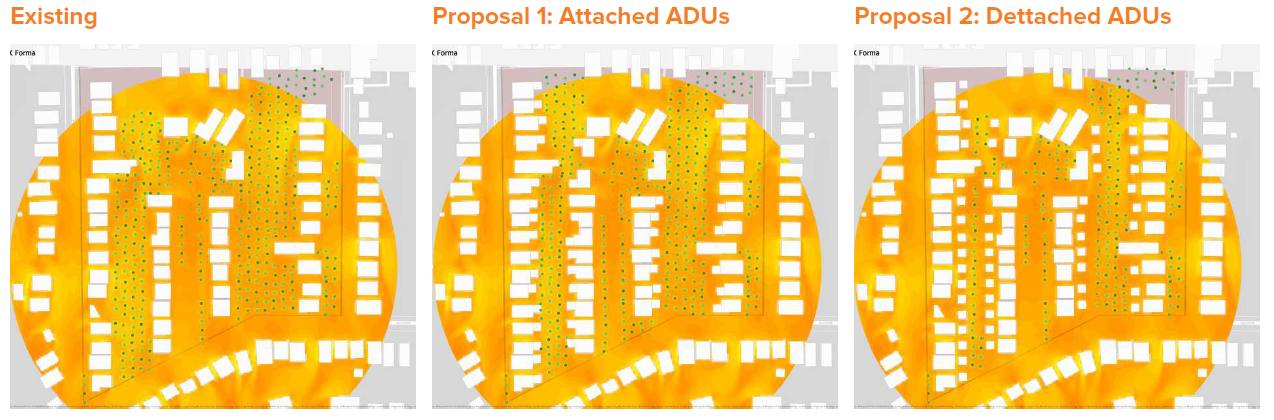
Purpose: Evaluate thermal comfort impacts of added density.
Run condition:
- July 21, 2 PM (peak summer heat)
Metrics recorded:
-
% strong heat stress
-
% moderate heat stress
-
Spatial concentration of heat
Key insight:
Heat stress changes were driven more by tree canopy loss than by density alone.
C. Wind Comfort Analysis
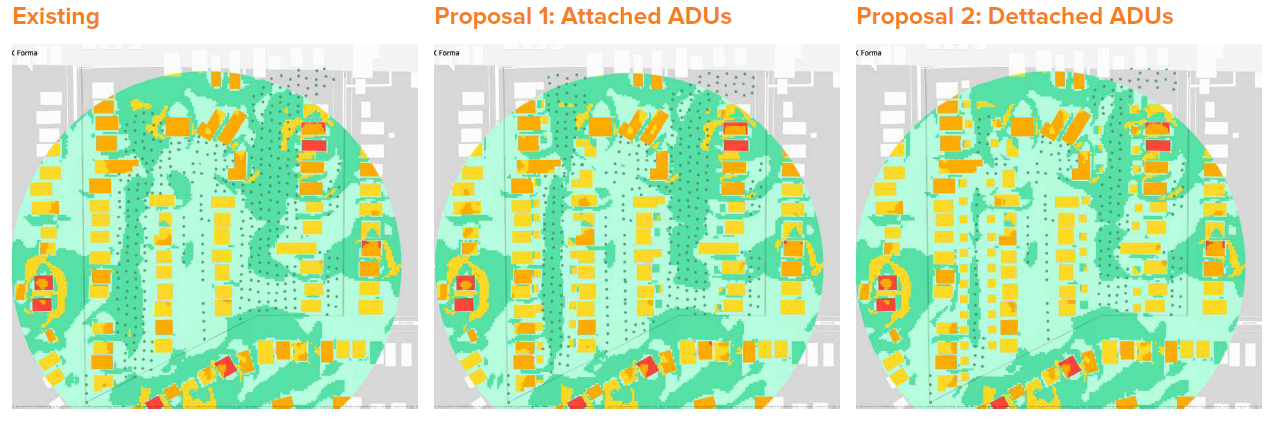
Purpose: Understand pedestrian-level comfort and ventilation.
Run condition:
- Prevailing east wind
Outputs:
-
Comfort categories (sitting → uncomfortable)
-
Wind stagnation vs channeling
-
Block interior ventilation
Key tradeoff:
- Trees improve comfort but can reduce cooling airflow
D. Solar Panel Potential
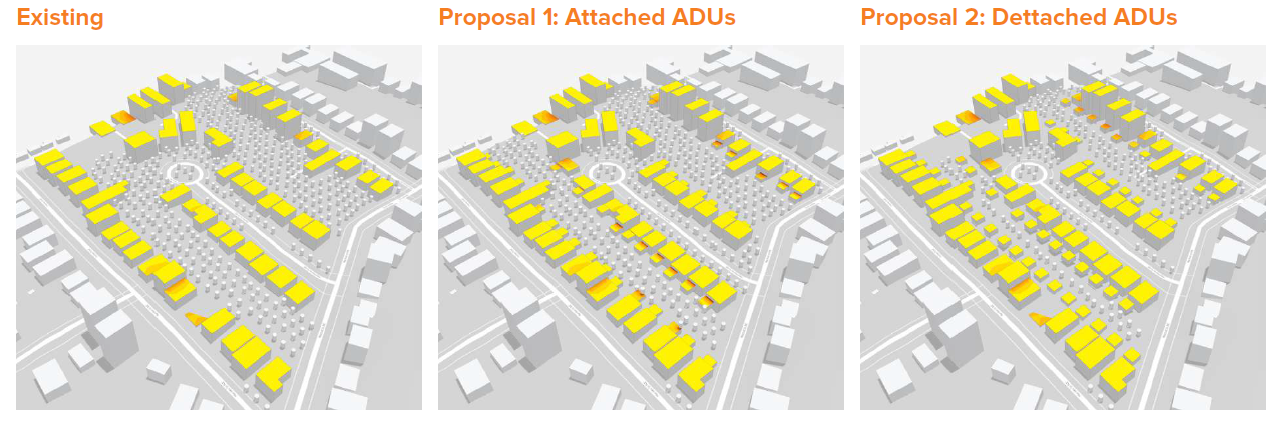
Purpose: Evaluate energy resilience benefits of added density.
Metrics recorded:
-
Total roof surface area
-
Panel placement area
-
Estimated annual energy output (kWh)
Finding:
Higher density increases total solar capacity, even if per-square-foot performance remains similar.
E. Stormwater + Runoff (Interpretive Analysis)
While Forma does not directly model runoff volume, geometry-based conclusions were drawn:
Observed impacts:
-
Increased roof area → increased runoff volume
-
Reduced parking helps lower impervious surface per unit
-
Tree loss reduces interception and evapotranspiration
Mitigation strategies proposed:
-
Mandatory rainwater harvesting
-
Cool / reflective roofs
-
Green roofs
-
Bioswales + green streets
-
Permeable paving
-
Tree replacement ratios
8. Writing Findings (Reusable Template)
For every analysis slide:
Findings
-
Quantitative results (% or area)
-
Spatial patterns
Interpretation
-
Comfort impacts
-
Environmental tradeoffs
-
Policy relevance
-
Equity implications
9. Key Results Summary
Reynoldstown (Retrofit Model)
-
~230 new units via ADUs + small MF
-
Minimal heat increase with canopy preservation
-
Stormwater manageable with lot-scale mitigation
-
Low displacement risk
Vine City (Rebuild + TOD Model)
-
196–263 new units across scenarios
-
Heat stress remains similar across densities
-
Significant solar + housing gains
-
Stormwater impacts require district-scale solutions
10. Resilience Toolkit (Recommended Requirements)
For missing-middle infill:
-
Rainwater harvesting on all new roofs
-
Cool or green roofs
-
Bioswales + curbside green infrastructure
-
Permeable paving
-
Tree replacement (1–2 new trees per removal)
11. Future Extensions
-
Quantitative stormwater modeling (SWMM / SCS-CN)
-
Canopy sensitivity testing
-
Neighborhood-to-neighborhood comparison toolkit
-
Policy scenario testing (density bonuses tied to resilience)
12. Citation
This repository is based on the Independent Study submission:
“Climate-Migration Readiness in Atlanta: Housing + Resilient Infrastructure”
Georgia Institute of Technology, 2025
13. For Future Students
If you are continuing this work:
-
Keep simulation settings constant
-
Always compare Existing vs Proposal
-
Pair density increases with required mitigation
-
Use simulations to support policy arguments, not just visuals
Source
Link to the repository.